Imagine standing beside the bed of someone you love. Just moments ago, that person was breathing, talking, smiling, and responding to your voice. But now, everything has changed. The breathing has stopped. The heartbeat is gone. The body that once held so much life has become motionless.
You look at the person and wonder: What exactly happens now?
Does the body immediately begin to decay? Why do the hands and feet become cold? Why do some muscles stiffen? Can the body still move after death? And most importantly, what does the Bible say happens to a person when they die?
Death is one of life’s greatest mysteries, but it doesn’t have to remain a mystery. Science can explain what happens to the human body after death, while the Bible reveals important truths about the nature of death and the hope beyond the grave.
Let’s examine what happens, step by step.
Do you want to learn what really happens once a person dies? If yes, download my FREE Bible study guide, “Beyond the Grave: Discover the Shocking Truth About Death, Heaven, and Hell.”
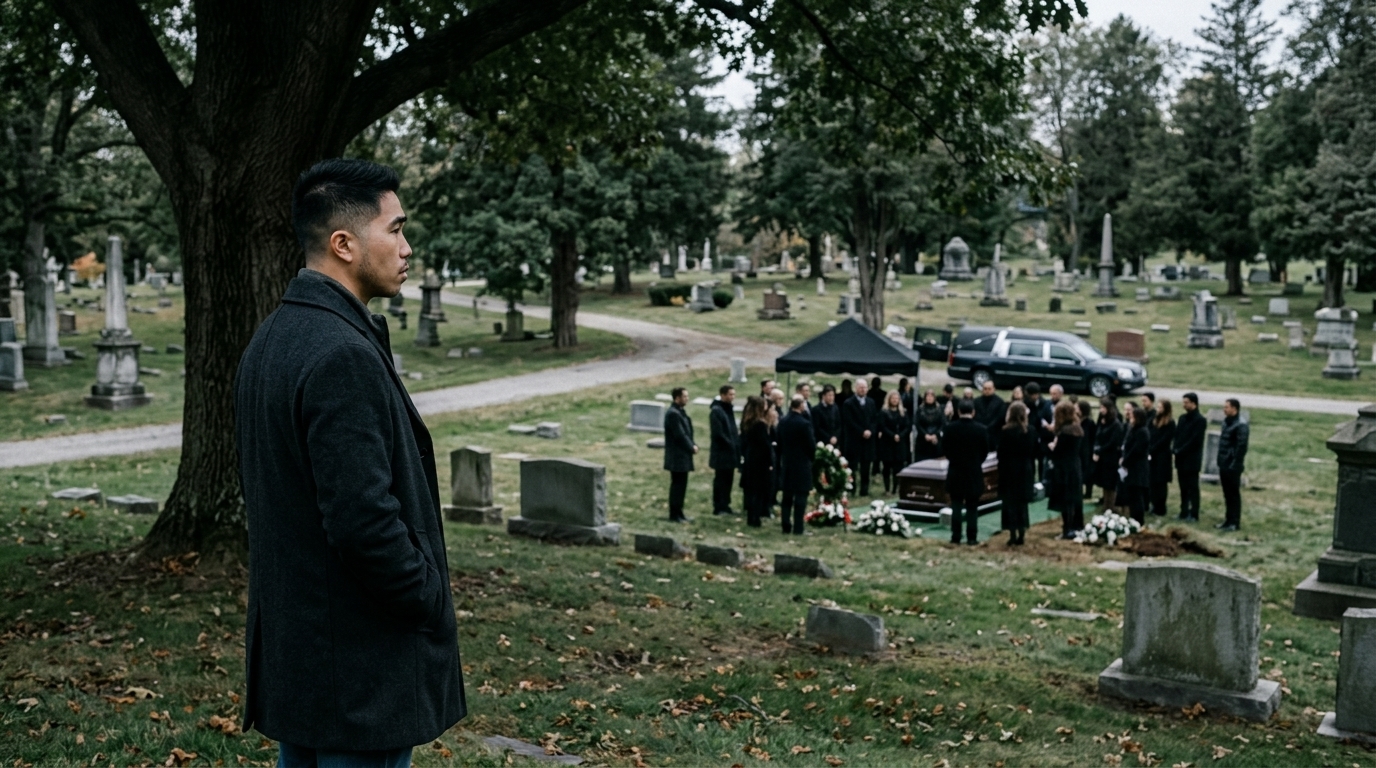
The Heart Stops Beating and Breathing Comes to an End
Death begins when the body can no longer sustain the vital processes necessary for life.
In most cases, the heart stops pumping blood effectively, preventing oxygen from reaching the brain and other organs. Breathing also stops, meaning the body can no longer take in the oxygen needed by its cells.
Without oxygen, cells begin to lose their ability to function. The brain is particularly vulnerable because it requires a continuous supply of oxygen to maintain normal activity.
Within seconds after the heart stops, a person loses consciousness. Brain activity rapidly changes, and irreversible damage can develop if circulation is not restored.
Eventually, the body’s organs and systems can no longer perform their functions.
Interestingly, the Bible describes death in terms of the loss of life’s breath.
Ecclesiastes 12:7 says:
“Then the dust will return to the earth as it was, And the spirit will return to God who gave it.”
This verse presents an important biblical picture of human life and death. The human body returns to the dust, while the spirit returns to God.
Notice that Scripture does not say that a person immediately goes to heaven or hell at death. Understanding what the Bible means by the spirit is essential to understanding what happens when we die.
The Body Begins to Cool Down
Have you ever noticed that the body of someone who has died feels cold?
There is a scientific reason for this.
While a person is alive, the body continuously produces heat through metabolism. The heart circulates warm blood throughout the body, helping maintain a relatively stable internal temperature.
When circulation and metabolism cease, the body can no longer regulate its temperature.
As a result, the body gradually cools until it approaches the temperature of its surroundings.
This process is called algor mortis, a Latin term meaning “coldness of death.”
The rate of cooling depends on several factors, including the surrounding temperature, clothing, body size, and air circulation.
This is one of the earliest noticeable physical changes following death.
The body that once maintained its own warmth now depends on its environment.
The Muscles Become Stiff
Another unusual thing that happens after death is that the muscles become stiff.
This condition is known as rigor mortis.
But why does it happen?
While a person is alive, muscles need energy in the form of ATP (adenosine triphosphate) to contract and relax properly.
After death, the body stops producing sufficient ATP. Without it, the muscles cannot release the chemical bonds responsible for contraction.
As a result, the muscles become stiff.
Rigor mortis usually begins within a few hours after death, becomes more pronounced over the following hours, and eventually disappears as decomposition progresses.
This explains why a dead person’s body may become difficult to move or reposition.
It is important to understand that this stiffness is a natural biological process. It does not mean that the person is still alive or consciously moving.
Top 3 Best-Selling Christian Books for November 2026


The Body Can Sometimes Move After Death
Here is something that might surprise you.
A dead body can sometimes appear to move!
Imagine seeing a person’s finger twitch, an arm shift, or the body make a small movement after death. It might seem frightening, especially if you do not understand what is happening.
However, these movements can have natural explanations.
After death, residual electrical activity, chemical changes, muscle contractions, and the release of gases can cause certain movements or changes in the body’s position.
During decomposition, bacteria break down tissues and produce gases that can cause swelling. The resulting pressure may cause movement or sounds.
In some circumstances, muscles can also contract as their remaining chemical processes change.
These movements do not mean that the person has regained consciousness or that life has returned.
The body is undergoing physical and chemical changes, not experiencing a return to life.
This is an important distinction because the appearance of movement does not necessarily indicate that someone is still alive.

The Body Begins to Decompose
Perhaps the most noticeable long-term change after death is decomposition.
Once a person dies, the body’s natural defense mechanisms stop functioning. Bacteria that previously existed harmlessly in the body, particularly in the digestive system, begin breaking down tissues.
Enzymes inside cells also begin digesting cellular structures. This process is called autolysis, or self-digestion.
As decomposition progresses, several changes occur:
- The skin may develop discoloration.
- The abdomen may swell because of gas production.
- Soft tissues gradually break down.
- Unpleasant odors develop.
- Eventually, much of the body’s soft tissue disappears.
The speed of decomposition varies considerably depending on temperature, moisture, exposure to insects, burial conditions, and other environmental factors.
Eventually, the body returns to the natural elements from which it came.
This brings us to an important statement God made to Adam in Genesis 3:19:
“In the sweat of your face you shall eat bread Till you return to the ground, For out of it you were taken; For dust you are, And to dust you shall return.”
Death is a reminder of humanity’s physical limitations.
No matter how wealthy, powerful, educated, or successful someone becomes, the physical body eventually returns to the ground.
What Happens to the Spirit When the Body Dies?
Now we come to perhaps the most important question.
If the body stops functioning, cools down, becomes stiff, and eventually decomposes, what happens to the spirit?
Many people believe that humans possess an immortal soul that immediately leaves the body and continues living consciously somewhere else.
However, is that what the Bible actually teaches?
Consider Ecclesiastes 9:5:
“For the living know that they will die; But the dead know nothing, And they have no more reward, For the memory of them is forgotten.”
This passage presents a different picture from the popular belief that the dead continue living consciously in another realm.
The Bible repeatedly compares death to sleep.
For example, when Lazarus died, Jesus told His disciples:
“Our friend Lazarus sleeps, but I go that I may wake him up” (John 11:11).
The disciples misunderstood His words, so Jesus plainly told them that Lazarus was dead (John 11:14).
Why would Jesus describe death as sleep?
Because death is a temporary state from which God can awaken a person through the resurrection.
The spirit that returns to God is not presented in these passages as a conscious, immortal person continuing ordinary human experiences after death. Rather, Scripture shows that God preserves the spirit associated with a person’s life and identity.
This is why the resurrection is so important.
God’s plan does not end with a person dying and their body returning to dust.
Is Death Really the End?
Thankfully, the Bible offers something much more encouraging than the idea that death is the end of everything.
Jesus Christ promised that the dead would be raised.
John 5:28-29 says:
“Do not marvel at this; for the hour is coming in which all who are in the graves will hear His voice and come forth…”
Think about what this means.
The dead are described as being in their graves, awaiting a future resurrection.
God has the power to restore life, even after the body has completely decomposed.
In 1 Corinthians 15:51-54, the apostle Paul explains that the resurrection involves a transformation. Those who belong to Christ will be changed from mortal to immortal.
This is the incredible hope that God offers humanity!
Death may bring an end to our present physical existence, but it does not mean that God’s purpose for humanity has failed.
The resurrection is central to His plan.

Final Thoughts: Understanding Death Helps Us Appreciate Life
The human body undergoes remarkable changes after death. The heart stops beating, the body cools, muscles become stiff, decomposition begins, and eventually the body returns to the dust.
These processes remind us of an unavoidable reality: our physical lives are temporary.
But the Bible reveals something far more important. Death is not the final chapter of God’s plan for humanity.
Through Jesus Christ, God offers the hope of resurrection and everlasting life.
Understanding what happens when we die can change how we view life, our priorities, and our relationship with our Creator.
But there are still important questions worth exploring.
What exactly is the spirit in man? Do people go to heaven when they die? What is hell? Are the dead really unconscious? And when will God bring the dead back to life?
Discover the answers directly from your Bible!
Download your FREE Bible study guide, “Beyond the Grave: The Shocking Truth About Death, Heaven, and Hell.”
This free guide will help you examine what Scripture really teaches about death, the afterlife, heaven, hell, and the incredible hope of the resurrection.
Don’t simply accept what tradition tells you. Discover what the Bible actually says.
Discover more from Becoming Christians
Subscribe to get the latest posts sent to your email.