No parent begins the journey of raising children planning to make mistakes.
We imagine ourselves being patient. Wise. Loving. Spiritually strong.
Then reality happens.
We lose our temper. We say things we later regret. We become too busy. We fail to listen. We discipline out of frustration instead of wisdom. Sometimes, we look back at decisions we made years ago and wonder if we have already damaged our children beyond repair.
Perhaps that is where you are today.
Maybe you are carrying guilt over mistakes you made when your children were younger. Maybe you came to know God later in life and regret the years when you did not lead your family spiritually. Maybe your relationship with your child is strained. Maybe you feel completely unqualified to raise a godly child because you are still struggling to become the person God wants you to be.
If so, here is something you need to remember:
God has never required perfect parents to raise children.
If He did, none of us would qualify.
The good news is that your mistakes do not have to become the final chapter of your family’s story.
You may be a broken parent. You may be an imperfect person. But through God’s grace, wisdom, humility, and intentional effort, you can still build a godly legacy.
Raise Godly Children in a Broken World
📢 Many parents are carrying their own wounds, failures, and brokenness while trying to raise children in an increasingly broken world. But you do not have to figure it out alone. Join my online course, How to Raise Godly Children, where I will guide you through timeless biblical principles and practical insights to help you build a strong, God-centered foundation for your family.

The Myth of the Perfect Parent
One of the most dangerous things Christian parents can believe is that good parenting means never making mistakes.
But the Bible does not present us with a long list of flawless fathers and mothers.
Abraham made serious mistakes. Isaac and Rebekah showed favoritism. Jacob’s family was filled with conflict and dysfunction. David was a man after God’s own heart, yet his failures had painful consequences within his family.
The Bible does not hide the failures of God’s people.
Why?
Because the message of Scripture is not that broken people can fix themselves and become perfect. The message is that God can work through imperfect people who are willing to turn to Him.
This does not mean our mistakes do not matter. They do.
Our words can hurt. Our neglect can leave wounds. Poor decisions can have consequences.
But failure does not mean finality.
A bad moment does not automatically make you a bad parent.
A bad season does not mean your entire family’s future is ruined.
And even years of mistakes do not place your family outside the reach of God’s grace.
The question is not, “Have I made mistakes?”
Every parent has.
The more important question is:
“What will I do with the mistakes I have made?”
Will you deny them?
Will you allow guilt to paralyze you?
Or will you allow God to use even your failures to make you a wiser, humbler, and more intentional parent?
Your Children Do Not Need a Perfect Parent
This may be difficult to accept, but your children do not need you to pretend that you have everything together.
In fact, one of the greatest lessons you can teach your children is what a person does after making a mistake.
Imagine what happens when a parent loses their temper and later says:
“I was wrong. I should not have spoken to you that way. Please forgive me.”
That moment teaches something powerful.
Your child learns that Christians are not people who never sin.
They are people who repent.
Your child learns that humility is not weakness.
Your child learns that asking for forgiveness is not something we merely demand from others. It is something we must be willing to do ourselves.
Sometimes, parents are afraid that apologizing will cause their children to lose respect for them.
But genuine humility often does the opposite.
It teaches your children that truth matters more than pride.
Of course, parents must still lead. Children need boundaries, correction, and guidance. Being humble does not mean surrendering your responsibility as a parent.
It simply means recognizing that authority does not make you infallible.
A godly parent is not someone who never has to say, “I was wrong.”
A godly parent is someone who is willing to say it.
Stop Letting Guilt Keep You Stuck
There is an important difference between godly sorrow and destructive guilt.
Godly sorrow can lead us to repentance and change.
Destructive guilt simply keeps us trapped in the past.
One says:
“I made a mistake. With God’s help, I need to change.”
The other says:
“I made a mistake. Therefore, I am hopeless, and it is too late to change anything.”
The first leads to transformation.
The second leads to paralysis.
Perhaps you cannot change what happened five years ago.
Perhaps you wish you had spent more time with your children.
Perhaps you regret being too harsh.
Perhaps you wish you had taught them the Bible more consistently.
Perhaps you wish you had been a better example.
You cannot go back and relive those years.
But you can make a decision about what happens next.
You can begin listening today.
You can begin praying with your children today.
You can begin studying God’s Word with them today.
You can begin apologizing where necessary today.
You can begin building trust today.
You can begin becoming the kind of parent you wish you had been years ago.
The best time to start may have been years ago. The second-best time is now.
Do not allow regret over yesterday to steal your opportunity to obey God today.
A Godly Legacy Is Built One Decision at a Time
When we hear the phrase godly legacy, we may imagine something grand and distant.
But a legacy is usually built through ordinary moments.
It is built when you choose to listen instead of immediately reacting.
It is built when you pray for your child after a difficult conversation.
It is built when you open the Bible, even when you do not feel like a spiritual expert.
It is built when you choose consistency over occasional emotional bursts of inspiration.
It is built when your children see that your faith is not something you practice only on Sabbath or Sunday, depending on your observance, but something that shapes the way you live every day.
Deuteronomy 6:6-7 gives parents a beautiful picture of intentional faith:
“And these words which I command you today shall be in your heart. You shall teach them diligently to your children…” (NKJV)
Notice where it begins.
The words must first be in your heart.
Before we can effectively teach our children about God, we must continually allow God to teach us.
That does not mean you must have mastered the Bible before you can talk about Scripture with your children.
You can learn together.
You can say, “Let’s find out what God says about this.”
You can open the Bible and explore God’s truth as a family.
Your children do not need a parent who knows every answer.
They need a parent who knows where to look for truth.
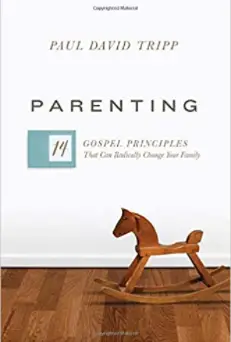
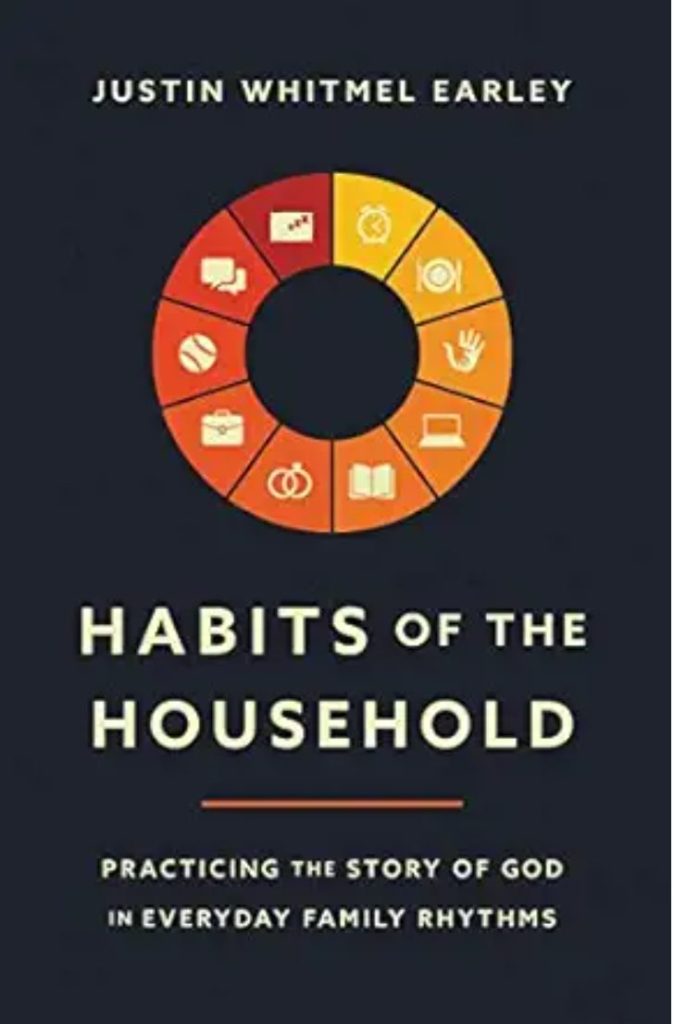
Best Christian Parenting Books in August 2026

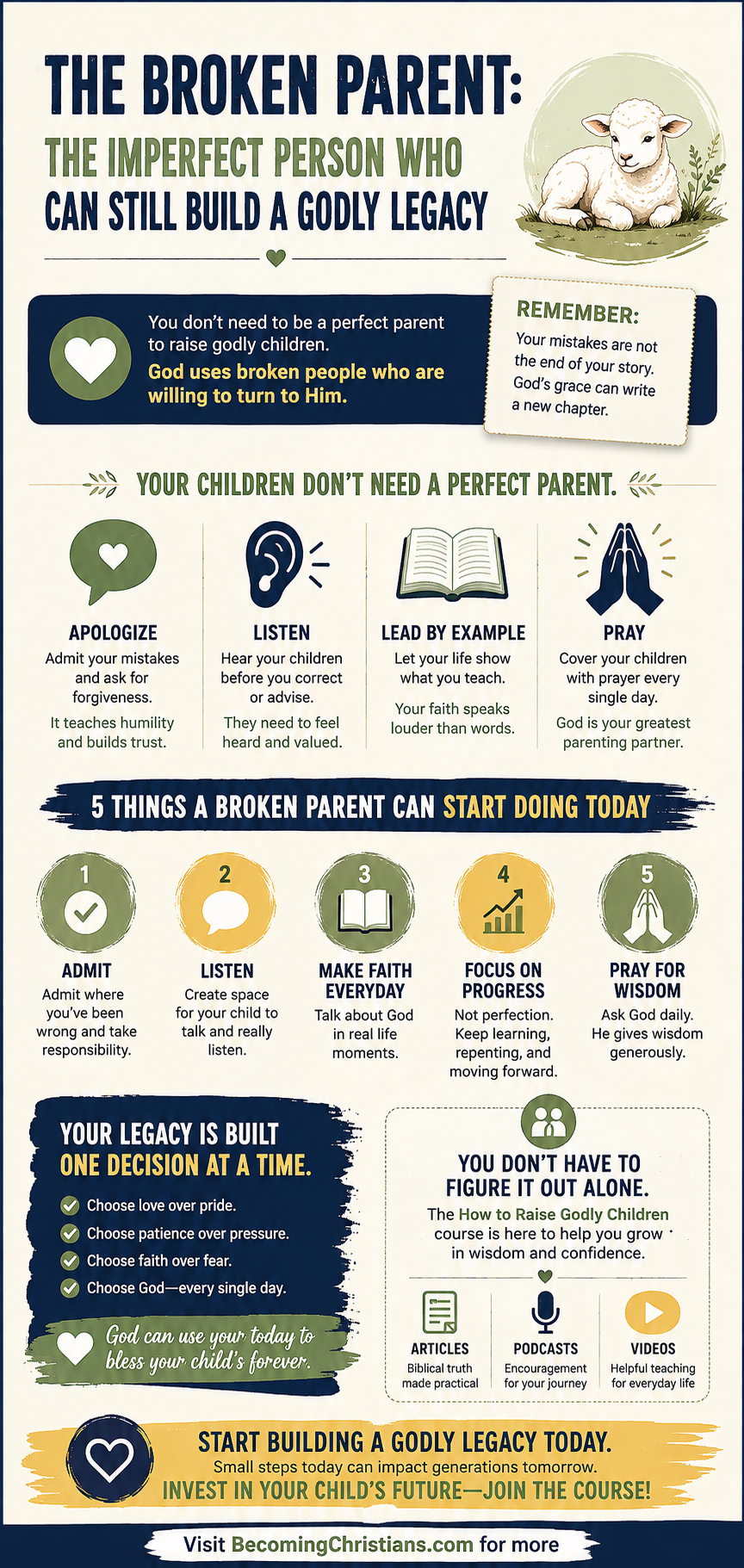
Five Things a Broken Parent Can Start Doing Today
You do not need to completely transform your family overnight.
Start with the next faithful step.
1. Admit where you have been wrong
If you have hurt your child, take responsibility.
Avoid excuses such as, “I’m sorry, but you made me angry.”
That is not a real apology.
Instead, own your actions.
Humility can begin healing conversations that pride has kept closed for years.
2. Create space to listen
Sometimes parents talk so much that they never truly hear what is happening in their children’s hearts.
Ask questions.
Listen without immediately correcting.
Try to understand before trying to solve.
Your child may not always need a lecture. Sometimes they need to know that their parent is safe to talk to.
3. Make faith part of everyday life
Do not limit spiritual conversations to formal Bible studies.
Talk about God when your child is afraid.
Talk about Scripture when they are facing a difficult decision.
Pray when someone in the family is struggling.
Help your children see that God’s Word is not merely a book to study. It is truth that applies to real life.
4. Focus on progress, not perfection
You will still make mistakes.
There will still be difficult days.
You may lose your patience again.
But do not give up.
Repent. Learn. Apologize if necessary. Then keep moving forward.
Spiritual growth is a journey, and that is true for parents too.
5. Pray for wisdom
James 1:5 gives this wonderful promise:
“If any of you lacks wisdom, let him ask of God, who gives to all liberally and without reproach…” (NKJV)
There will be moments when you simply do not know what to do.
You may not know how to handle your child’s behavior, answer a difficult question, respond to rebellion, or guide them through a painful experience.
Ask God for wisdom.
You do not have to carry the responsibility of parenting alone.
Your Story Is Still Being Written
Perhaps your greatest fear is that your children will remember your failures more than your love.
Perhaps you wonder whether you have already lost too much time.
But remember this:
As long as there is still an opportunity to love, teach, repent, pray, and grow, there is still an opportunity to make a difference.
You cannot control every decision your children will make.
Even the best parents cannot force their children to love God.
Every person must eventually make that choice for themselves.
But you can influence them.
You can create an environment where faith is lived, not merely discussed.
You can model repentance.
You can teach truth.
You can pray faithfully.
You can love consistently.
And you can trust that God is able to work in ways that you cannot.
Your legacy will not be determined by whether you were a flawless parent.
None of us will be.
Your legacy may be shaped by something far more powerful:
When you failed, did you turn back to God? When you made mistakes, did you learn? When your family struggled, did you give up or keep building?
Your children may one day look back and remember that you were imperfect.
But perhaps they will also remember something even more important.
They will remember a parent who loved God.
A parent who kept trying.
A parent who was humble enough to admit mistakes.
A parent who prayed.
A parent who opened God’s Word.
A parent who refused to let failure have the final word.
That is a legacy worth building.
You Don’t Have to Figure Out Godly Parenting Alone
Raising children in today’s world is challenging.
There are countless voices competing for your child’s attention, values, and beliefs. As Christian parents, we cannot simply hope that our children will somehow develop a strong relationship with God on their own.
We need to be intentional.
We need biblical wisdom.
And sometimes, we need practical guidance to help us understand how to apply God’s principles in the everyday challenges of parenting.
That is exactly why I created How to Raise Godly Children.
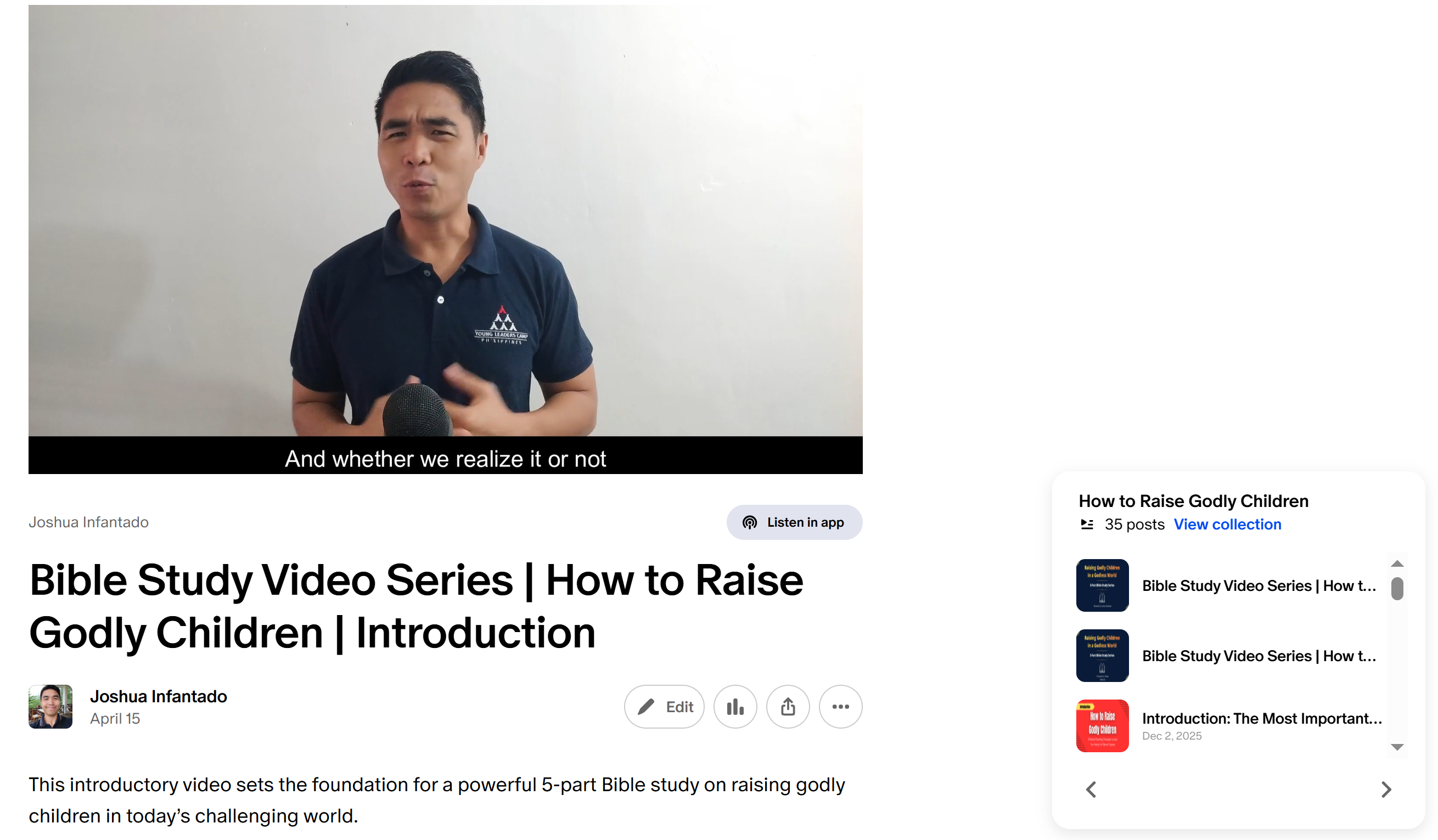
This online course is designed to help Christian parents become more intentional about building faith within their homes. Through practical articles, engaging podcasts, and helpful videos, you can learn biblical principles and gain encouragement for one of the most important responsibilities God has entrusted to you.
You do not need to be a perfect parent to begin.
You simply need to be willing to grow.
If you are tired of feeling unsure about how to guide your children spiritually, if you want to build a stronger biblical foundation in your home, and if you want practical help as you seek to raise children who know, love, and follow God, then this course is for you.
Your past mistakes do not have to define your future as a parent.
You can start making different choices.
You can become more intentional.
You can grow in wisdom.
And beginning today, you can start building the godly legacy you want to leave behind.
Don’t wait until you feel like the perfect parent. That day will never come. Start with the parent you are today, place your family in God’s hands, and take the next step toward becoming the godly parent He is calling you to be.
Ready to Start Building a Godly Legacy?
Join the “How to Raise Godly Children” course today and discover practical, biblical guidance through articles, podcasts, and videos designed to help you lead your children closer to God.
Your children are growing every day. The question is not whether they are being shaped. The question is who, and what, is shaping them.
Take a more intentional role in building their spiritual foundation.
Start the course today and begin building a legacy that can impact your children for years, and even generations, to come.
Discover more from Becoming Christians
Subscribe to get the latest posts sent to your email.