Money can quietly reveal what is happening inside your heart.
You can love God, pray every day, read the Bible, and genuinely want to follow Him, yet still struggle with your finances.
Maybe you earn enough, but somehow never have enough.
Maybe you are drowning in debt.
Maybe you spend impulsively and regret it later.
Maybe you want to save, but something always comes up.
Or perhaps you simply wonder:
“What does God actually want me to do with my money?”
The Bible has a lot to say about it.
And surprisingly, biblical financial wisdom isn’t primarily about becoming rich.
It is about becoming faithful.
💰 You need to handle money with wisdom because poor financial decisions can cost you years of stress, debt, and missed opportunities. Learn how to manage your finances God’s way through 14 practical and powerful biblical principles in my online course, How to Manage Finances, and start learning for free today.

1. Remember that your money ultimately belongs to God
One of the biggest changes in your financial life happens when you stop thinking, “This is my money,” and start thinking, “God entrusted this to me.”
David said:
“The earth is the LORD’s, and all its fullness, The world and those who dwell therein.”
Psalm 24:1, NKJV
Everything ultimately belongs to God.
Your salary.
Your business.
Your possessions.
Your opportunities.
You are a steward, not the ultimate owner.
That changes how you spend.
Before buying something, ask:
“Is this a wise use of what God has entrusted to me?”
That one question can prevent countless financial mistakes.
2. Don’t spend everything you earn
One of the simplest biblical principles is also one of the most practical:
Live below your means.
Proverbs 21:20 says:
“There is desirable treasure, And oil in the dwelling of the wise, But a foolish man squanders it.”
The wise person doesn’t consume everything immediately.
Suppose you earn ₱30,000 a month.
If you spend ₱30,000, you have no margin.
One unexpected medical bill, repair, or emergency can immediately put you into debt.
But if you intentionally spend less than you earn, you create breathing room.
Income gives you possibilities. Discipline gives you options.
3. Learn to distinguish needs from wants
Not everything you want is something you need.
And the problem is that modern marketing constantly tries to convince you otherwise.
You don’t need the newest phone.
You don’t need to eat at an expensive restaurant every weekend.
You don’t need to upgrade your perfectly functional possessions just because something newer came out.
James gives us an important warning about unchecked desires:
“You lust and do not have. You murder and covet and cannot obtain.”
James 4:2, NKJV
Before purchasing something, try asking:
Do I need this, or do I simply want this?
There is nothing inherently wrong with enjoying good things.
The danger comes when our desires control our money.
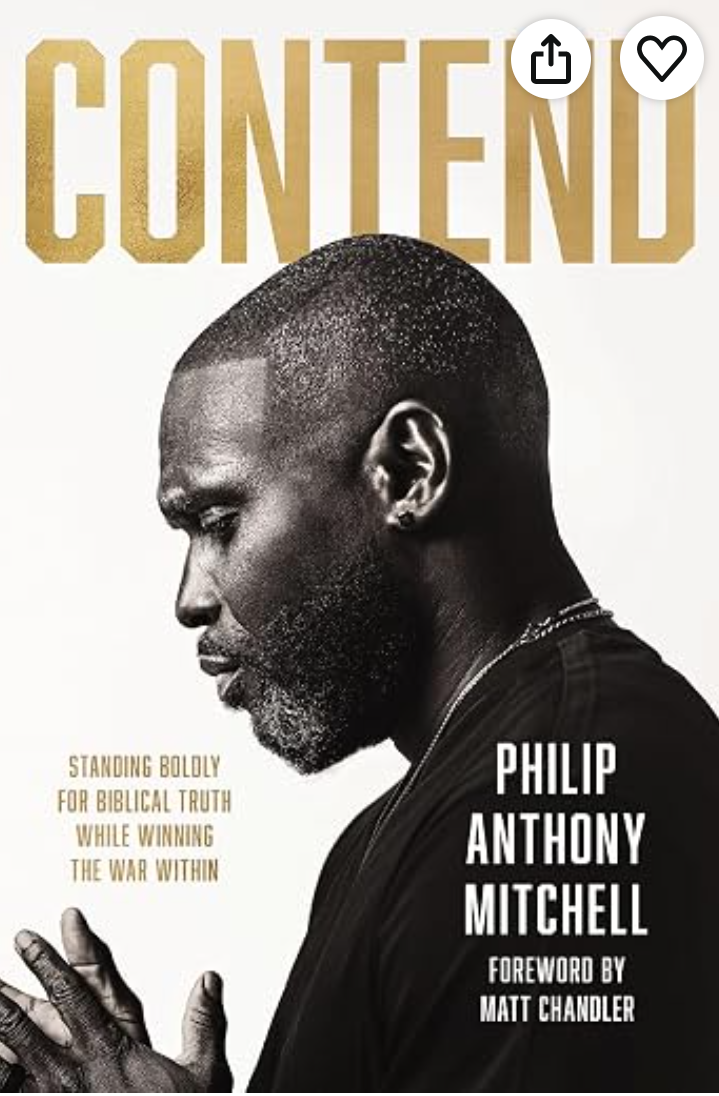
Top 3 Best-Selling Christian Books for October 2026


4. Plan where your money will go
Some people don’t have an income problem.
They have a planning problem.
Money arrives, bills get paid, spending happens, and suddenly the month is over.
Proverbs 21:5 says:
“The plans of the diligent lead surely to plenty, But those of everyone who is hasty, surely to poverty.”
A budget is simply a plan for your money.
You can start with something simple:
- Give
- Save
- Essential expenses
- Debt repayment
- Personal spending
- Emergency fund
You don’t need a complicated spreadsheet.
You need a plan you will actually follow.
If you don’t tell your money where to go, your impulses will.
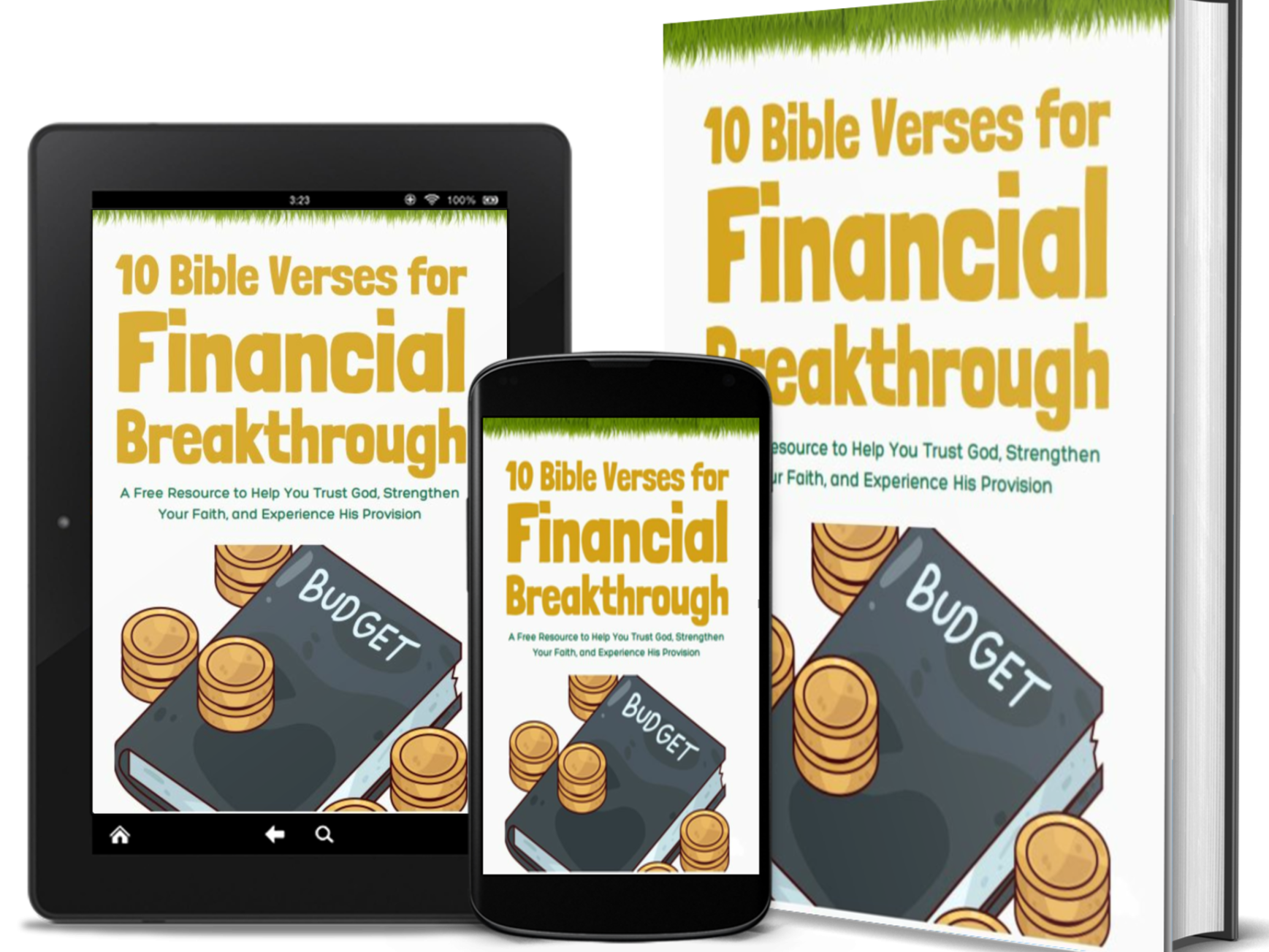
FREE Guide:
10 Bible Verses for Financial Breakthrough
5. Build an emergency fund
Life is unpredictable.
Your car can break down.
Your roof can leak.
You can lose your job.
A family member can become sick.
An emergency fund doesn’t mean you don’t trust God.
It means you recognize that wisdom prepares for foreseeable problems.
Proverbs 22:3 says:
“A prudent man foresees evil and hides himself, But the simple pass on and are punished.”
Start small.
Even saving ₱500 or ₱1,000 consistently is better than saving nothing.
The goal is to gradually build enough financial margin that an unexpected expense doesn’t immediately become a financial disaster.
6. Be extremely careful with debt
Debt can make something affordable today while making it expensive tomorrow.
The Bible doesn’t teach that every form of borrowing is automatically sinful, but it does give us a serious warning:
“The rich rules over the poor, And the borrower is servant to the lender.”
Proverbs 22:7, NKJV
Think about that.
When you borrow money, you are committing part of your future income to something you purchased in the past.
That’s why debt should never be treated casually.
Before borrowing, ask:
“Will this debt help me build something valuable, or am I simply buying something I cannot currently afford?”
That question alone can save you years of financial stress.
7. Practice contentment
Perhaps one of the greatest financial lessons in the Bible is also one of the least practiced:
Learn to be content.
Paul wrote:
“And having food and clothing, with these we shall be content.”
1 Timothy 6:8, NKJV
Contentment doesn’t mean you should never improve your situation.
It means your happiness isn’t dependent on getting more.
Without contentment, there is no salary large enough.
You get a raise, then want another raise.
You buy a new phone, then want the next model.
You improve your house, then want a bigger one.
You upgrade your lifestyle, and suddenly your previous income isn’t enough anymore.
If your lifestyle grows every time your income grows, you may never feel financially free.
Contentment breaks that cycle.
8. Give generously
Biblical financial management isn’t simply about keeping more money.
It is also about learning to give.
Jesus said:
“It is more blessed to give than to receive.”
Acts 20:35, NKJV
Generosity reminds us that money is not our master.
It teaches us to loosen our grip.
Whether you give to God’s work, help someone in genuine need, support ministry, or bless someone unexpectedly, generosity turns money from something you merely consume into something you can use for a greater purpose.
9. Don’t let money become your master
Money is a useful servant but a terrible master.
Jesus warned:
“No one can serve two masters… You cannot serve God and mammon.”
Matthew 6:24, NKJV
Notice that Jesus didn’t say you cannot have money.
He said you cannot serve both God and money.
The question isn’t simply:
“How much money do I have?”
A better question is:
“How much control does money have over me?”
If money determines your happiness, your decisions, your identity, and your sense of security, something has gone wrong.
God wants your trust, not your wallet.
10. Seek God’s wisdom before making financial decisions
You don’t have to figure everything out by yourself.
James gives us a beautiful promise:
“If any of you lacks wisdom, let him ask of God, who gives to all liberally and without reproach.”
James 1:5, NKJV
Pray about your finances.
Study what Scripture says.
Seek wise counsel.
Think before you act.
And don’t confuse “I want it” with “God wants it.”
Sometimes the most spiritual financial decision is simply having the wisdom to say no.

What Would Change If You Managed Money God’s Way?
Imagine waking up without constantly worrying about your next bill.
Imagine having savings for emergencies.
Imagine making purchases without guilt because you have already planned for them.
Imagine reducing your debt instead of constantly adding to it.
Imagine being generous without feeling financially terrified.
Imagine knowing that your financial decisions are guided not merely by emotions, advertisements, or social pressure, but by biblical principles.
That’s possible.
But it requires more than knowing a few Bible verses about money.
You need a system of biblical financial principles that you can actually apply.
And that’s exactly why I created How to Manage Finances.
Learn How to Manage Your Finances Biblically
How to Manage Finances is an online course designed to help you understand and apply 14 practical and powerful biblical principles for handling money.
It’s not simply about making more money.
It’s about learning how to handle the money you already have wisely, responsibly, and according to God’s principles.
Inside the course, you’ll find practical lessons covering biblical principles of financial management, along with additional bonus content to help you go deeper.
You’ll get:
- 14 powerful biblical financial principles
- Practical articles you can study at your own pace
- Video lessons that make the principles easier to understand
- Bonus content for deeper learning
- Practical guidance you can apply to your everyday financial decisions
You don’t need to be wealthy to benefit from this course.
You don’t need to have everything figured out.
And you don’t need to wait until your finances are perfect.
Start where you are.
Because financial stewardship isn’t about how much you have.
It’s about how faithfully you manage what God has placed in your hands.
Start Learning for Free
If you know you need to become wiser with your finances, don’t just read about biblical money management and move on.
Take the next step.
You can actually start the course for free and begin learning how to manage your finances according to biblical principles.
Your money can either become a source of constant stress or a tool you faithfully use for God’s purposes.
Learn how to make it the latter.
👉 Start How to Manage Finances for free today and discover the biblical principles that can transform the way you handle money.
Discover more from Becoming Christians
Subscribe to get the latest posts sent to your email.