In The Jesus Discoveries, New Testament scholar and apologist Jeremiah J. Johnston guides readers through ten of the most significant archaeological and historical finds ever unearthed — from the Shroud of Turin and the Dead Sea Scrolls to ancient Roman graffiti mocking the crucifixion — each one shedding tangible light on the life, death, and resurrection of Jesus Christ.
Written for believers who want intellectual grounding and for skeptics who demand evidence before belief, the book makes a compelling case that Christianity is not built on blind faith but on a bedrock of historical testimony. More than a museum tour of ancient artifacts, Johnston connects every discovery to the personal stories of modern readers, asking how the facts of Jesus’s story can transform one’s own.
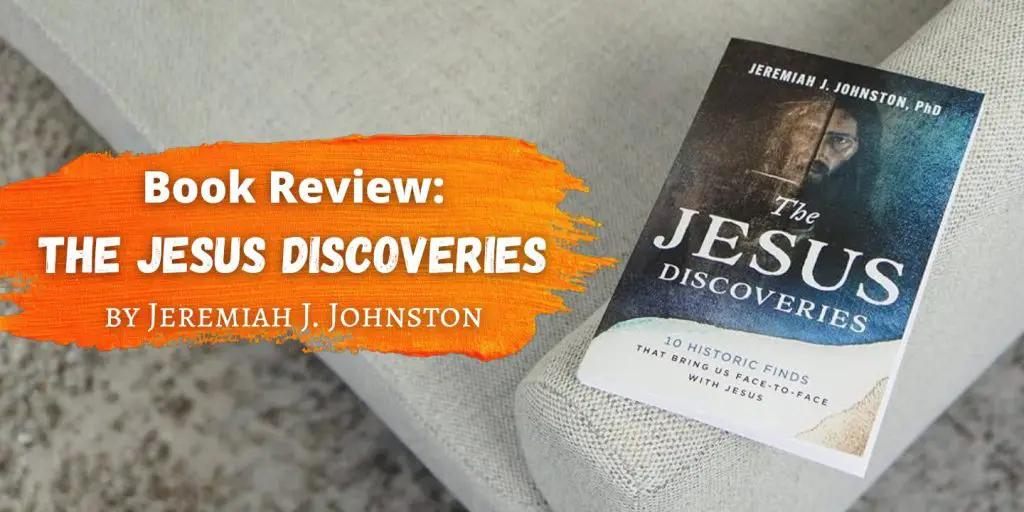
Overview: When Artifacts Speak
We live in a show-me-the-evidence age. Across social media, university lecture halls, and late-night dinner tables, the historicity of Jesus is questioned with a confidence that assumes no such evidence exists. The Jesus Discoveries walks directly into that assumption and dismantles it, one artifact at a time.
Johnston opens with the provocative cultural reality that many people carry a kind of “artifacts or it didn’t happen” attitude toward the claims of Christianity. His response is not defensive; it is archaeological. Over the course of ten carefully crafted chapters, he walks readers through a gallery of physical, documentary, and epigraphic evidence that corroborates the biblical narrative in striking ways.
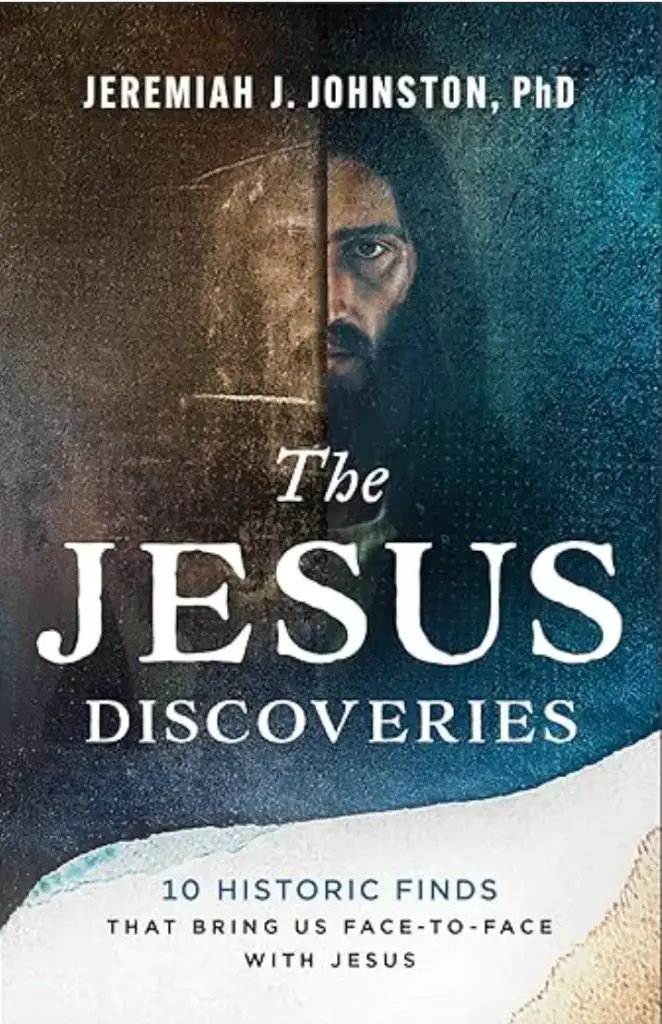
The result is a book that feels less like a formal defense and more like a guided expedition — part travelogue, part seminary lecture, and part pastoral reflection. For a volume of only 176 pages, it covers remarkable ground.
“There are centuries of archaeological discoveries that support the narratives found in the Bible. Lost cities and civilizations, found. Lost art and technology, rediscovered. Lost documents, retrieved.”
The Ten Discoveries at a Glance
Each chapter spotlights a specific artifact or historical find, explaining its discovery, its significance, the scholarly debates surrounding it, and what it reveals about Jesus. Among the highlights explored in the book:
Discovery 1
The Shroud of Turin — the disputed burial cloth bearing the image of a crucified man
Discovery 3
The Palatine Graffito — ancient Roman graffiti depicting a donkey-headed figure on a cross, mocking early Christians
Discovery 5
The Magdalen Papyrus — an early Greek fragment of the Gospel of Matthew with significant dating implications
Discovery 7
The Crucified Heel Bone — skeletal remains of a first-century crucifixion victim, with a nail still embedded
Discovery 9
Extra-biblical Historical Records — writings by Josephus, Tacitus, and Pliny the Younger referencing Jesus
Discovery 2
The James Ossuary — the bone box bearing the inscription “James, son of Joseph, brother of Jesus”
Discovery 4
The Dead Sea Scrolls — ancient manuscripts confirming the antiquity and accuracy of the Hebrew scriptures
Discovery 6
The Pilate Stone — a limestone block bearing Pontius Pilate’s name, confirming his historical existence
Discovery 8
Early Christian Community Evidence — artifacts from nascent Christian communities corroborating Acts-era church life
Discovery 10
Resurrection Evidence — physical and textual indicators pointing to the bodily resurrection as a historical event
Johnston does not claim these discoveries “prove” Christianity in a laboratory sense. Rather, he argues — convincingly — that the cumulative weight of the evidence makes faith in the Jesus of the Gospels not only reasonable but historically defensible.
Who Is Jeremiah J. Johnston?
Jeremiah J. Johnston, PhD, MA, MDiv, BA
New Testament Scholar · President, Christian Thinkers Society · Pastor of Apologetics & Cultural Engagement, Prestonwood Baptist Church, Dallas, TX · Senior Fellow of Christian Origins, Dallas Baptist University · Author of 15+ books including Body of Proof and the Peace of God Bible
Johnston is not a pop-theology commentator. He is a credentialed New Testament scholar who completed his doctoral residency at Oxford in partnership with the Oxford Centre for Mission Studies, receiving his PhD from Middlesex University (UK). He holds master’s degrees from Acadia University (Canada) and Midwestern Baptist Theological Seminary, and he is an elected member of the prestigious Studiorum Novi Testamenti Societas (SNTS) — the preeminent New Testament scholarly guild in the world.
He has published academic work with Oxford University Press, E.J. Brill, Bloomsbury T&T Clark, Macmillan, and Mohr Siebeck, and has personally examined ancient manuscripts at the Bodleian Library at Oxford and the Beinecke Rare Book and Manuscript Library at Yale. In short, this is someone who has held the actual papyri.
Yet Johnston writes with pastoral warmth and popular accessibility. He is a regular voice on Fox News, CNN, TBN, The Daily Wire, and Salem Radio, and he serves as pastor of apologetics and cultural engagement at Prestonwood Baptist Church in Plano, Texas — one of the largest churches in America. This dual life in both the academy and the local church is precisely what makes The Jesus Discoveries work: rigorous enough to satisfy the curious mind, warm enough to move the seeking heart.
It is also worth noting that Johnston dedicated this book to his son Abel, one of his triplet boys — a personal detail that underscores the pastoral heart beneath the scholarly credentials.
“Dr. Jeremiah Johnston sets the record straight regarding the historicity of Jesus of Nazareth.”
— From the book’s endorsements
The book also carries endorsements from Lee Strobel (The Case for Christ), Sheila Walsh, Greg Laurie, Jack Graham, and noted New Testament scholar Craig Keener — a lineup that signals both popular reach and academic respectability.
🚨 SUPER IMPORTANT TO READ: 🚨
Editor’s note: This list of books is intended to be used for informational purposes only. Moreover, I have my own fundamental beliefs that may differ from that of the authors, creators, and sellers of the products featured here. Moreover, you can also choose to read books I have written or enroll in my best online course. Ultimately, whatever books you choose in this list, make sure you study your Bible first because it is always the best of the best books of all time Here’s a list of Bibles that you should have. Finally, I am an Amazon Affiliate Program participant. As an Amazon Associate, I earn from qualifying purchases at no additional cost to you. I would highly appreciate it if you buy books through my site. Thank you!
What You Will Learn
The physical evidence for Jesus is far richer than skeptics assume
One of the book’s most valuable contributions is its counter-cultural corrective: that the claim “there is no evidence Jesus existed” is, to use Johnston’s word, simply wrong. Readers will come away equipped with specific, named artifacts — their discovery dates, the scholars who studied them, and the ongoing academic debates — that they can reference in conversations about faith.
How to interpret archaeological evidence without overstating it
Johnston is careful not to dress contested artifacts in more certainty than they warrant. He acknowledges scholarly debates — such as the carbon dating controversy surrounding the Shroud of Turin — and explains competing positions fairly before offering his own informed assessment. This intellectual honesty makes the book more, not less, persuasive.
The historical method applied to biblical claims
Readers gain a practical understanding of how historians establish facts, evaluate sources, and weigh cumulative evidence. This skill transfers: after reading Johnston, you will think more clearly about historical claims in general.
Extra-biblical confirmation of the Gospel accounts
A highlight of the book is its treatment of non-Christian ancient sources — Josephus, Tacitus, Pliny the Younger — who, as Johnston explains, corroborate key details about Jesus, his execution under Pontius Pilate, and the rapid spread of early Christianity. These are not fringe references; they are mainstream Roman-era historians whose writings are preserved in major academic libraries worldwide.
How Jesus’s story connects to your own
Johnston does not leave the reader in the museum. Each chapter pivots from history to personal application, asking what it means for a modern person that these things are true. The book is as much devotional as it is apologetic.
Should You Read It? An Honest Assessment
| Reasons to Read | Limitations to Consider |
|---|---|
| ✔️ You want evidence-based answers to skeptical challenges about Jesus | ❌ Advanced scholars may find the treatment of individual artifacts too brief |
| ✔️ You are a believer who wants a stronger intellectual foundation for your faith | ❌ The book does not engage deeply with counterarguments from critical scholars |
| ✔️ You are a skeptic open to engaging with the actual historical record | ❌ Its faith-affirming framing may feel one-sided to secular academic readers |
| ✔️ You enjoy accessible archaeology and ancient history | ❌ Those seeking a comprehensive archaeological textbook will need additional resources |
| ✔️ You need a short, engaging read — at 176 pages, it is highly digestible | ❌ Some readers may wish for more extensive footnotes and bibliographic depth |
| ✔️ You want conversation-ready material for discussing faith with doubters | |
| ✔️ You appreciate a pastoral tone that balances scholarship with warmth | |
| ✔️ You are new to Christian apologetics and want a welcoming entry point |
It is worth being clear: this is not a neutral academic survey. Johnston writes as a believing scholar who wants to strengthen and encourage faith. That is not a flaw — it is a feature for the audience the book is written for.
Readers who want a purely detached academic treatment should pair this book with works by scholars like Craig Evans or N.T. Wright. But as an accessible, faith-oriented introduction to the archaeological case for Jesus, it is hard to beat.
Who Should Read This Book?
This book is ideally suited for:
- Christian believers seeking intellectual grounding
- Curious skeptics open to historical evidence
- Small group Bible study participants
- Apologetics students and teachers
- Pastors preparing sermons on the resurrection
- College students facing faith challenges
- History and archaeology enthusiasts
- New Christians wanting a stronger foundation
- Parents equipping teenagers for secular culture
It is particularly well-suited as a first apologetics book — accessible enough for readers with no background in biblical scholarship, yet substantive enough to genuinely inform. At 176 pages it is also an ideal group read, with each artifact chapter lending itself naturally to discussion.

A Balanced Critique
What Johnston does exceptionally well
The book’s greatest strength is its humanity. Johnston does not write like someone trying to win a debate; he writes like someone who has stood in piazzas in Turin, examined ancient papyri in Oxford reading rooms, and come away genuinely moved. That personal engagement with the evidence transmits to the reader. There is a warmth and wonder here that pure academic texts rarely achieve.
The chapter on the Palatine Graffito — a crude piece of Roman graffiti from around 200 AD depicting a man with a donkey’s head hanging on a cross, with the inscription “Alexamenos worships his god” — is a particular highlight. Johnston uses this mocking artifact not as a source of shame but as ironclad evidence: the Romans themselves knew Christians were worshipping a crucified man. A movement that invented its central figure would not be mocked for worshipping a crucified one barely 150 years after the fact.
Where it could go deeper
The book’s brevity is both its strength and its limitation. At 176 pages covering ten major discoveries, each artifact necessarily receives a compressed treatment. Readers who have already read deeper works on, say, the Dead Sea Scrolls or the James Ossuary may feel the book skims where it could dive. The bibliography, while functional, would benefit from more guided further reading for those who want to go deeper.
Additionally, skeptical scholars and secular archaeologists will likely find Johnston’s interpretive framing too confident in places. The debates around several of these artifacts — particularly the Shroud of Turin and the James Ossuary — are genuinely contested among experts, and some readers may wish Johnston engaged more directly with the strongest critical voices.
These are minor concerns in the context of what the book sets out to do. Johnston is not writing a comprehensive reference work; he is writing a faith-fortifying introduction. On those terms, it succeeds admirably.
Bottom Line: Is It Worth Reading?
Yes — emphatically, for the right reader. The Jesus Discoveries achieves something genuinely difficult: it makes archaeology personal. It takes objects buried under centuries of dust and shows why they matter today, not just to historians, but to anyone asking the oldest and most important question: Was Jesus who he said he was?
Johnston’s dual credentials — rigorous scholar and caring pastor — mean the book never tips into dry academic recitation or shallow inspirational fluff. It occupies the productive middle ground where evidence and faith meet, and it invites readers of every background to consider what a growing body of physical evidence has to say about the man at the center of history.
In an era when misinformation about Jesus’s historicity spreads effortlessly online, a book like this serves a genuine cultural need. The Jesus Discoveries equips ordinary readers with real knowledge — the kind grounded not in assertion, but in artifacts you can see, touch, and hold.
Final Verdict
A compelling, accessible, and warmly written tour through ten of history’s most faith-relevant archaeological finds. Essential reading for believers who want a stronger intellectual foundation and a generous invitation to skeptics willing to follow the evidence wherever it leads.
Discover more from Becoming Christians
Subscribe to get the latest posts sent to your email.