The political landscape of the United States has just changed dramatically. And the consequences could extend far beyond the next election cycle.
On November 3, 2026, American voters delivered a major political setback to President Donald Trump and the Republican Party. Democrats won control of both the House of Representatives and the Senate, setting the stage for a divided government when the new Congress begins in January 2027.
Democrats have secured at least 54 Senate seats, while projections indicate that they could hold between 251 and 268 seats in the House. This represents a substantial shift in political power and gives Democrats considerable influence over the remainder of Trump’s presidency.
For Trump, this means something significant: His final two years in office will be very different from his first two years of his second term.
But what exactly could happen?
Will Democrats attempt to impeach him again? Will the government experience more shutdowns? Could the United States become even more politically divided? What happens to Trump’s policies, judicial appointments, and foreign policy decisions?
More importantly, what biblical lessons can Christians learn from these developments? Could these events point toward larger trends that Scripture warns us about?
Let’s examine what could happen next, what history suggests, and what the Bible teaches us about the times in which we live.
Do you want to read world news and events written in advance? If yes, then you need to learn more about Biblical Prophecies. Download my FREE study guide, “Signs of the Age: 21 Bible Prophecies That Must Be Fulfilled Before Jesus Christ’s Return.”
Trump Will Face a Congress That Can Challenge Almost Everything He Wants to Accomplish
Perhaps the biggest consequence of the midterm elections is that Trump will no longer enjoy a Republican-controlled Congress.
For the remainder of his presidency, Democrats will control both chambers of the legislative branch.
This changes the balance of power in Washington.
The president cannot simply introduce his preferred policies and expect Congress to approve them. Legislation must pass through both the House and Senate before reaching his desk.
Democrats will now have the ability to block Republican legislative priorities, hold hearings, investigate government agencies, and scrutinize presidential decisions.
However, Trump still possesses an important constitutional power: the presidential veto.
If Congress passes legislation that he opposes, he can reject it. Overriding that veto requires a two-thirds majority in both chambers, something Democrats are unlikely to achieve.
Consequently, we could see two years of legislative deadlock.
There may be proposals from Democrats that Trump refuses to sign, along with Republican initiatives that never make it through Congress.
The biblical lesson: Political power is temporary.
Daniel 2:21 tells us:
“And He changes the times and the seasons; He removes kings and raises up kings; He gives wisdom to the wise and knowledge to those who have understanding.”
This is a powerful reminder that political authority does not belong permanently to any individual or political party.
A president may enter office with enormous political influence, only to discover that circumstances can change dramatically within a few years.
The same principle applies to Congress, political movements, and entire governments.
Christians should therefore be careful about placing their ultimate confidence in political leaders. Elections can change political power, but they cannot change the sovereignty of God.
2. Investigations Against Trump Could Intensify
One of the most predictable consequences of Democrats gaining control of Congress is increased oversight of the Trump administration.
Congressional committees have considerable investigative authority. They can conduct hearings, request documents, issue subpoenas, and investigate matters involving the executive branch.
Democratic lawmakers have already indicated their interest in investigating several areas, including Trump’s family business dealings and decisions made by his administration.
This could become one of the defining characteristics of his final two years.
There is also the possibility of another impeachment effort.
Remember that the House of Representatives has the authority to impeach a president through a majority vote. The Senate then conducts the trial.
Conviction and removal require a two-thirds vote of senators present.
With Democrats holding at least 54 Senate seats, they would still need substantial Republican support to remove Trump.
Therefore, another impeachment is politically possible, but his actual removal from office is much less certain.
The biblical lesson: Hidden wrongdoing does not remain hidden forever.
Luke 12:2 says:
“For there is nothing covered that will not be revealed, nor hidden that will not be known.”
This principle reminds us that accountability is an important part of God’s moral order.
Whether investigations uncover wrongdoing or expose politically motivated accusations, the larger lesson remains the same: Leaders should not consider themselves above accountability.
The Bible repeatedly warns those in authority against corruption, dishonesty, oppression, and abuse of power.
Proverbs 16:12 says:
“It is an abomination for kings to commit wickedness, for a throne is established by righteousness.”
Political leaders should understand that authority comes with responsibility.
A position of power is not a license to do whatever one desires. It is an opportunity to serve, protect, and administer justice.
Top 3 Best-Selling Christian Books for November 2026


Government Shutdowns and Economic Uncertainty Could Become More Likely
Another major possibility is a confrontation over government funding.
When the president and Congress belong to opposing political parties, budget negotiations can become extremely difficult.
Democrats may attempt to use their control of government spending to challenge Trump’s priorities. Trump, meanwhile, could reject spending proposals that he considers unacceptable.
This creates the possibility of another government shutdown.
We have seen this before.
Bill Clinton experienced two government shutdowns after Republicans took control of Congress in 1994.
Barack Obama faced a 16-day shutdown in 2013.
Trump himself experienced a 35-day government shutdown during his first presidency, largely because of disagreements over funding for his proposed border wall.
These historical examples demonstrate how quickly political disagreements can affect government operations.
A prolonged funding dispute could affect federal employees, government services, contractors, and public confidence.
It could also create additional economic uncertainty at a time when Americans are already concerned about living costs, inflation, and the country’s financial direction.
The biblical lesson: A nation’s prosperity is not guaranteed by its wealth.
Proverbs 14:34 says:
“Righteousness exalts a nation, but sin is a reproach to any people.”
A country can possess tremendous economic resources, technological advancement, military strength, and international influence. Yet none of these guarantees lasting stability.
The Bible teaches that righteousness, justice, and obedience to God’s principles matter.
This does not mean every economic difficulty is direct evidence of national punishment. Rather, it reminds us that material prosperity alone is not the foundation of a healthy society.
Christians should pray for leaders to make wise decisions that protect ordinary citizens, particularly those who are most vulnerable to economic hardship.
Trump’s Foreign Policy Could Become More Complicated
One area that deserves particular attention is foreign policy.
The president remains commander in chief, but Congress has important constitutional responsibilities involving military funding, declarations of war, oversight, and international agreements.
With Democrats controlling both chambers, Trump’s foreign policy decisions could face much greater scrutiny.
This is especially important given the ongoing Iran conflict.
Democratic lawmakers may question the administration’s military strategy, spending priorities, objectives, and the long-term consequences of American involvement.
Congress could attempt to restrict funding or impose additional conditions on military operations.
However, this does not mean Democrats will automatically be able to end the conflict. The president retains significant authority over military operations, and disagreements between the executive and legislative branches could create further tension.
There is also the possibility that Trump could become more aggressive in using executive authority in areas where Congress refuses to cooperate.
The next two years could therefore bring a combination of military uncertainty, diplomatic disagreements, and political confrontation.
The biblical lesson: Human governments cannot guarantee lasting peace.
1 Thessalonians 5:3 warns:
“For when they say, ‘Peace and safety!’ then sudden destruction comes upon them, as labor pains upon a pregnant woman. And they shall not escape.”
This passage is particularly important when examining the broader condition of the world.
Human beings have repeatedly attempted to establish peace through political agreements, military alliances, economic partnerships, and international institutions.
Yet history demonstrates that peace achieved through human arrangements can be fragile.
This does not mean every diplomatic agreement is meaningless or that every international conflict signals the immediate fulfillment of prophecy.
Rather, Christians should understand that lasting peace requires something much greater than political negotiations.
It requires the righteous government and leadership of God.
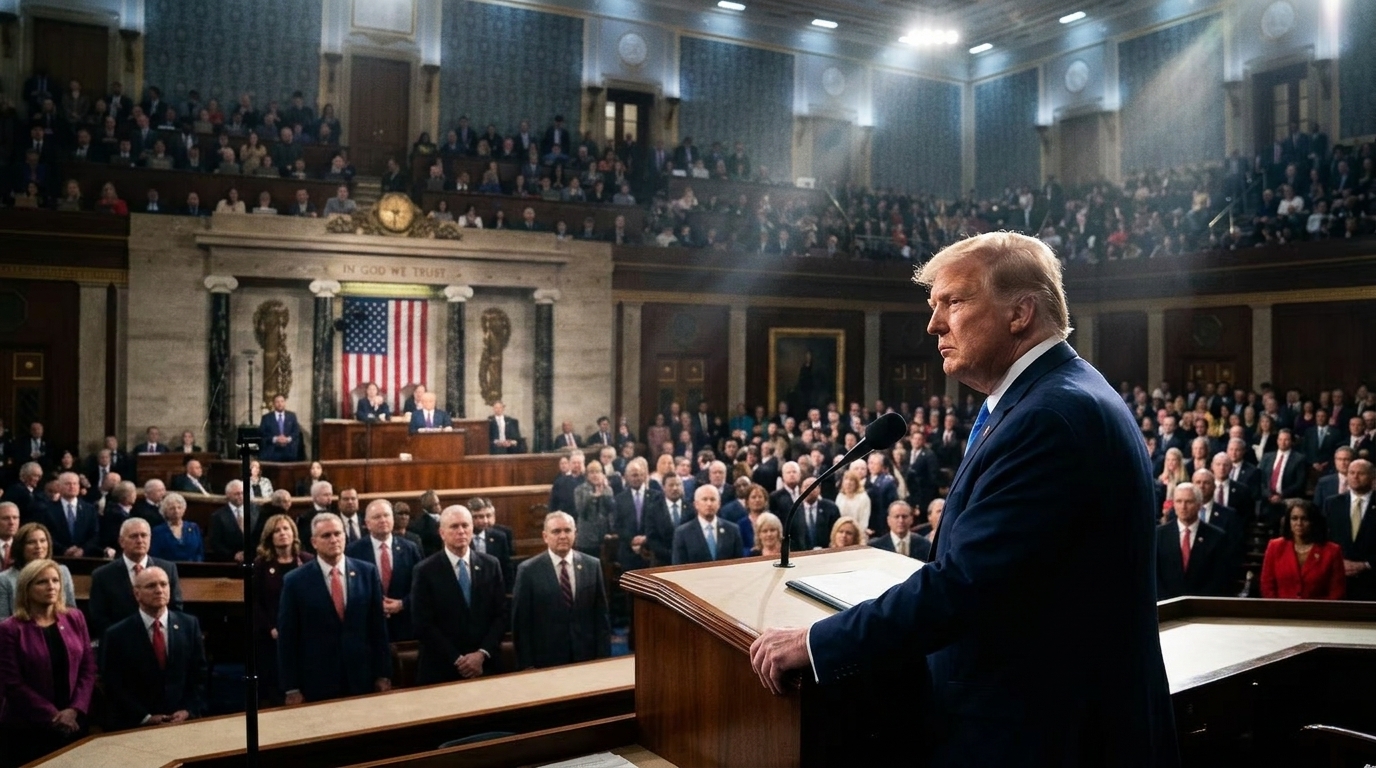
Political Division in America Could Become Even Worse
Perhaps the most concerning development is not simply that Democrats and Republicans disagree.
It is the possibility that political hostility will become even more deeply embedded in American society.
Consider what could happen over the next two years.
Democrats may pursue aggressive investigations. Trump may respond by accusing congressional Democrats of political persecution. Republicans may become increasingly divided over their party’s future, while Democrats may use their victories to advance an ambitious legislative agenda.
Every major disagreement could become another national political controversy.
The 2028 presidential election will also begin influencing political decisions long before Americans actually vote.
Vice President JD Vance and other Republican leaders will face questions about the future of the Republican Party.
Democratic leaders, meanwhile, will have to decide whether to pursue cooperation or use their congressional majority to confront the president.
This environment could create an increasingly polarized nation.
The biblical lesson: Division weakens a nation.
Matthew 12:25 records the words of Yeshua:
“Every kingdom divided against itself is brought to desolation, and every city or house divided against itself will not stand.”
Although Yeshua was discussing the accusation that He cast out demons by Satan’s power, the principle He expressed is also relevant when considering the dangers of internal division.
A society that becomes consumed by hatred, hostility, and endless political conflict can undermine its own stability.
When citizens view political opponents as enemies rather than fellow human beings, meaningful cooperation becomes increasingly difficult.
The Bible calls Christians to pursue peace, exercise self-control, and treat others with dignity, even when disagreements are serious.
We should not allow political disagreements to destroy our ability to love our neighbors.
Could This Be a Turning Point for America’s Political Future?
There is another important development worth considering.
Trump cannot run for another presidential term under the Twenty-Second Amendment, which limits a person to being elected president twice.
This means that the political consequences of the 2026 midterm elections will extend into the 2028 presidential race.
Republicans must now consider how they will maintain their political influence after Trump leaves office.
Democrats, on the other hand, may see this victory as an opportunity to build momentum toward the next presidential election.
The coming two years could therefore become a period of intense political repositioning.
However, we should remember that political predictions are not guarantees.
Democrats could overreach. Republicans could reorganize and regain public support. Economic developments, international events, and unexpected controversies could change the political landscape.
History shows that losing congressional control does not necessarily mean the end of a political movement.
But it does create a new set of challenges.
What Could These Events Mean From a Biblical Prophetic Perspective?
Now we come to perhaps the most important question for Christians.
Does Trump’s loss of Congress mean something prophetically significant?
Could these developments be connected to the events described in biblical prophecy?
We need to approach this question carefully.
The Bible contains prophecies concerning kingdoms, nations, political powers, wars, economic conditions, and the establishment of God’s Kingdom.
However, it does not identify Donald Trump, the Democratic Party, or the Republican Party as specific prophetic figures.
Therefore, we should avoid making confident declarations that the 2026 midterm elections fulfill a particular biblical prophecy.
Nevertheless, several biblical themes are worth watching.
First, the increasing instability of human governments.
Daniel 2:44 describes a future time when the God of heaven will establish a Kingdom that will never be destroyed.
This prophecy reminds us that every human government is temporary.
Political parties rise and fall. Presidents come and go. Powerful nations eventually lose their influence.
But God’s Kingdom will not be replaced by another political system.
The growing instability of human governments should remind Christians that the ultimate solution to mankind’s problems is not another election.
It is the establishment of God’s government.
Second, the possibility of increasing international conflict.
Matthew 24:6-7 describes wars, rumors of wars, and nations rising against nations.
These conditions should be taken seriously, particularly when considering America’s involvement in international conflicts and the possibility of further geopolitical instability.
However, Yeshua also warned His followers not to become troubled merely because they hear reports of wars.
We should distinguish between developments that resemble the conditions described in prophecy and events that can confidently be identified as specific prophetic fulfillments.
Third, the growing importance of economic and political power.
Revelation 13 describes a powerful system involving political authority, worship, deception, and economic restrictions.
It is worth studying how political power, economic influence, and international systems could eventually intersect in ways that resemble the conditions described in this chapter.
But we should not automatically identify a particular American administration, political party, or economic policy as the beast system.
The important lesson is to understand the biblical principles and remain spiritually alert.
Fourth, the need for Christians to remain faithful regardless of political circumstances.
Perhaps this is the most important prophetic lesson of all.
The Bible does not tell Christians to place their ultimate hope in the success of a particular political party.
Our responsibility is to remain faithful to God, understand His Word, and prepare for the establishment of His Kingdom.
Regardless of who controls Congress, the calling of a Christian remains the same.
What Should Christians Do While Watching These Developments?
There are several practical lessons we can take from this political moment.
1. Do not place your ultimate hope in political leaders.
Psalm 146:3 says:
“Do not put your trust in princes, nor in a son of man, in whom there is no help.”
Political leaders can accomplish certain things, but they cannot solve humanity’s deepest spiritual problems.
Our confidence must remain in God.
2. Pray for those in authority.
1 Timothy 2:1-2 instructs Christians to offer prayers, supplications, intercessions, and thanksgiving for all people, including kings and those in authority.
Notice that this instruction is not limited to leaders we personally support.
We should pray for wisdom, justice, restraint, and peace, regardless of which political party holds power.
3. Do not allow politics to become an idol.
Political developments can easily consume our attention.
It is important to understand what is happening in the world, but we must never allow political arguments to replace our relationship with God.
Our identity should be rooted in our calling as followers of Yeshua, not in our political affiliations.
4. Continue studying biblical prophecy.
We should not ignore world events, but neither should we interpret every headline as a prophetic fulfillment.
Instead, study Scripture carefully, compare developments with what the Bible actually says, and remain watchful without becoming fearful.
5. Prepare spiritually, not politically.
The most important preparation Christians can make is spiritual.
Develop godly character. Strengthen your faith. Practice obedience. Grow in love, patience, wisdom, and discernment.
These are things that will remain valuable regardless of what happens in Washington.
Final Thoughts: Washington May Change, but God’s Kingdom Remains
Donald Trump’s loss of both chambers of Congress is a significant political development.
Over the next two years, we could witness congressional investigations, legislative deadlock, government funding disputes, judicial confirmation battles, and increased political polarization.
There may also be unexpected political agreements and developments that nobody currently anticipates.
But perhaps the most important lesson is not about Donald Trump, the Democrats, or the Republicans.
It is about the temporary nature of human government.
The Bible repeatedly reminds us that God remains sovereign over the affairs of nations. He raises up rulers and removes them. He allows human governments to exercise authority for a time, but their power is never greater than His.
Ultimately, the solution to America’s political problems, and the problems of the entire world, will not come through another election.
It will come through the establishment of God’s Kingdom.
Until then, our responsibility is to remain faithful, watchful, prayerful, and committed to living according to God’s Word.
Washington may change hands. Political fortunes may rise and fall. But God’s promises remain.
The question we should ask ourselves is not simply, “What will happen to America next?” It is also, “Am I spiritually prepared for what lies ahead?”
Are You Prepared for What Lies Ahead?
Political leaders rise and fall. Nations experience seasons of peace and turmoil. And the world continues to face developments that remind us of the warnings recorded in Bible prophecy.

But how much do you really understand about the events that must take place before Jesus Christ returns?
Don’t rely on sensational headlines, political commentators, or speculative predictions. Discover what the Bible actually says!
I’ve prepared a FREE Bible study guide entitled “Signs of the Age: 21 Bible Prophecies That Must Be Fulfilled Before Jesus Christ’s Return.”
Inside this guide, you’ll discover 21 important Bible prophecies, understand what Scripture says about the future, and learn which events we should watch for as we approach the return of Jesus Christ.
Don’t just watch the news. Learn to understand world events through the lens of Bible prophecy.
Download your FREE copy today and discover what the Bible reveals about the future!
Discover more from Becoming Christians
Subscribe to get the latest posts sent to your email.