Have you ever wondered when a person actually receives the Holy Spirit?
Maybe you grew up hearing that the Holy Spirit is automatically given to you the moment you believe in Jesus. Perhaps you were told that you receive the Holy Spirit when you accept Christ into your heart. Others might say that the Holy Spirit comes upon you during an emotional worship service or when you experience a powerful spiritual moment.
But what does the Bible actually say?
There is a reason this question matters.
The Holy Spirit is not some optional addition to Christianity. Scripture presents it as essential to our relationship with God. Paul wrote, “Now if anyone does not have the Spirit of Christ, he is not His” (Romans 8:9, NKJV).
That is a serious statement.
So when do we receive God’s Spirit? And how?
Let’s allow the Bible to answer.
📢 Do you want to discover more biblical truths and grow closer to God? Join our Patreon community, where we learn together, encourage one another, and receive daily teachings designed to strengthen our faith and help us grow in our relationship with God.
First, What Is the Holy Spirit?
Before we answer when we receive the Holy Spirit, we need to understand what it is.
The Bible describes the Holy Spirit as the power of God through which He works. Jesus told His disciples, “You shall receive power when the Holy Spirit has come upon you” (Acts 1:8, NKJV).
The connection is important.
The Holy Spirit is repeatedly associated with God’s power. It is something God gives, something that can be poured out, something with which people can be filled, and something that can even be stirred up within us.
This gives us a much more practical understanding of the Spirit.
God does not give us His Spirit merely so we can claim a religious label. He gives us His Spirit so that His power can work in us.
It changes us.
It helps us understand His truth. It strengthens us when we are weak. It helps us overcome sin. It produces godly character. It enables us to develop the mind and character of Christ.
In other words, receiving God’s Spirit is not about having a mystical experience.
It is about beginning a transformed life.
So When Do We Receive the Holy Spirit?
The biblical pattern is remarkably clear.
We receive the Holy Spirit after genuine repentance and baptism, through the laying on of hands by God’s ministers.
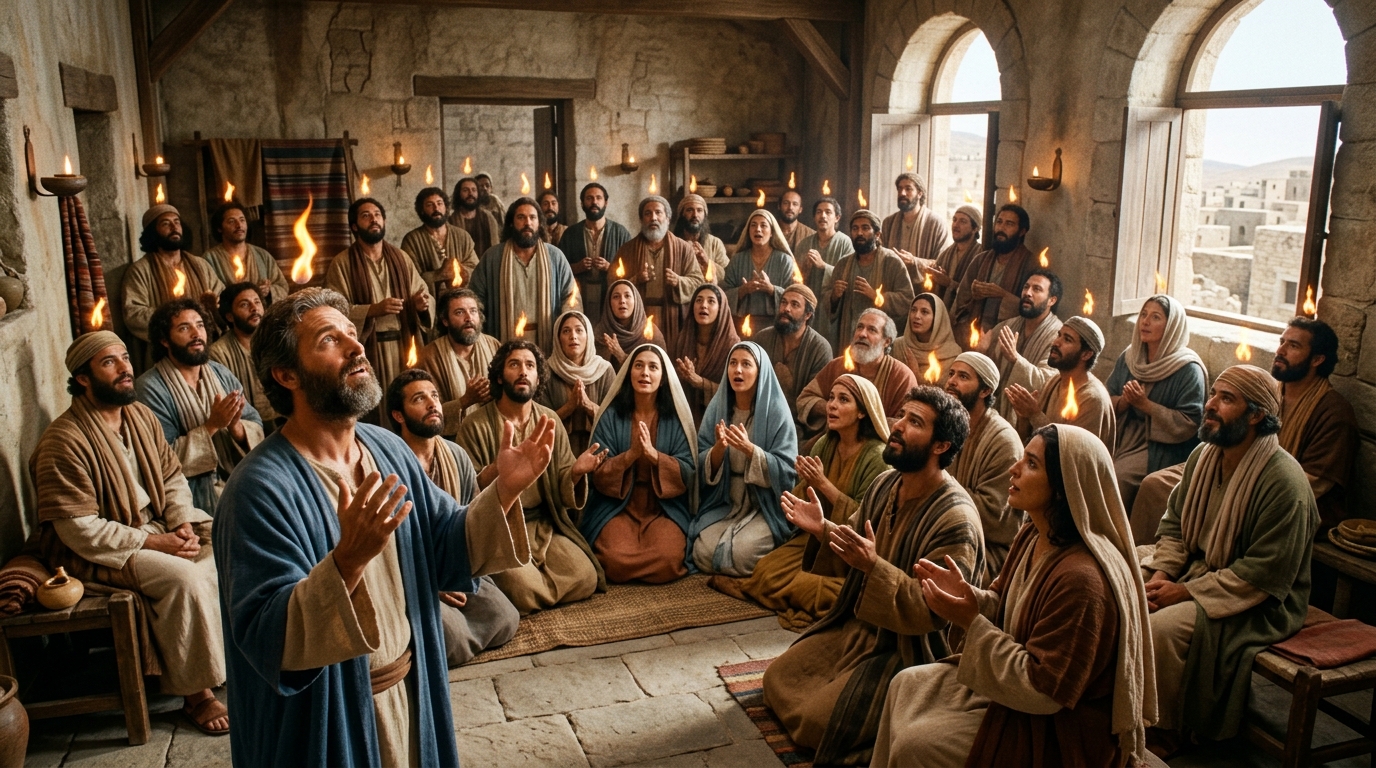
Consider what happened on the Day of Pentecost.
After Peter preached to the crowd and the people realized they had sinned, they asked what they should do.
Peter gave them a direct answer:
“Repent, and let every one of you be baptized in the name of Jesus Christ for the remission of sins; and you shall receive the gift of the Holy Spirit.”
Acts 2:38, NKJV
Notice the progression.
Repent.
Be baptized.
Receive the Holy Spirit.
This is not presented as a vague emotional experience. Peter was explaining what people needed to do in response to the truth they had just heard.
But there is another important part of the biblical pattern that we should not overlook.
Baptism Is Not the End of the Process
Acts gives us an especially interesting example in Samaria.
People had believed and had been baptized, yet the apostles later sent Peter and John to them. When the apostles arrived, they prayed for them and laid hands on them so they could receive the Holy Spirit.
Acts 8:17 says:
“Then they laid hands on them, and they received the Holy Spirit.”
Acts 8:17, NKJV
This is significant.
If baptism automatically meant that a person had already received the Holy Spirit, there would have been no reason for this additional step.
The same pattern appears again in Acts 19.
Paul encountered disciples in Ephesus and discovered that they had not yet received the Holy Spirit. After they were properly instructed, they were baptized in the name of the Lord Jesus. Then Paul laid hands on them.
And the result?
They received the Holy Spirit.
These passages provide evidence that baptism alone is not sufficient. The Spirit is imparted through the biblically established practice of the laying on of hands by one of God’s ministers.
That gives us a picture that is much more deliberate than many people realize.
Top 3 Best-Selling Christian Books for September 2026



But It Starts Before Baptism
There is something else we should understand.
Receiving the Holy Spirit does not begin with baptism.
It begins with God calling us.
Jesus said:
“No one can come to Me unless the Father who sent Me draws him.”
John 6:44, NKJV
God the Father is the One who calls a person to a new way of life. His goodness leads us toward repentance.
Think about what that means.
Perhaps you have experienced moments when God’s Word suddenly became personal.
You read something you had seen a hundred times before, but suddenly it struck your heart.
You began seeing your life differently.
You recognized attitudes, habits, and sins that you had previously excused.
You realized that simply being a “good person” was not enough.
You wanted to change.
You wanted to obey God.
You wanted to know Him.
That awakening should not be dismissed.
God may be calling you.
And when God calls, He does not call us merely to feel inspired for a few minutes. He calls us to repentance and a completely new way of living.

Repentance Means More Than Feeling Sorry
This is where the subject becomes deeply personal.
Repentance is not simply feeling guilty.
You can feel terrible about something and still continue doing it.
Biblical repentance involves a change of direction.
It means recognizing that our way is wrong and becoming willing to surrender our way to God.
That can be difficult.
Sometimes we want God’s forgiveness without God’s authority.
We want the blessings without the obedience.
We want Christ as Savior without allowing Him to become the Lord of our lives.
But God’s Spirit is given to help us live differently.
The Bible explains that we cannot overcome our sins and shortcomings through human effort alone. God’s Spirit is what enables us to grow, overcome, and have our minds renewed.
That is why repentance is so important.
God is not simply interested in changing what we say.
He wants to change who we are becoming.
Why Do We Need the Holy Spirit?
Because we cannot become like Christ by ourselves.
You can make resolutions.
You can develop better habits.
You can force yourself to behave differently for a while.
But changing behavior on the outside is not the same thing as changing the heart on the inside.
Paul wrote:
“And do not be conformed to this world, but be transformed by the renewing of your mind.”
Romans 12:2, NKJV
How does that transformation happen?
Through God’s Spirit working in us.
The Holy Spirit helps us understand God’s Word and His purpose. It helps us recognize sin. It strengthens us in our weaknesses. It produces godly fruit and helps us develop the character of Christ.
And perhaps most importantly, it enables us to become God’s children.
Paul wrote:
“For as many as are led by the Spirit of God, these are sons of God.”
Romans 8:14, NKJV
That changes how we should think about receiving the Holy Spirit.
It is not merely about receiving “something spiritual.”
It is about entering into a relationship with God and beginning a life of transformation.
What Happens After We Receive It?
Receiving God’s Spirit is not the finish line.
It is the beginning.
Paul told Timothy:
“Therefore I remind you to stir up the gift of God which is in you through the laying on of my hands.”
2 Timothy 1:6, NKJV
Notice that expression:
Stir up the gift.
A fire can begin with a tiny flame, but if you neglect it, it can grow cold.
The same principle applies spiritually.
We cannot receive God’s Spirit and then simply forget about God.
We must continue praying.
We must study His Word.
We must obey Him.
We must resist sin.
We must draw near to Him.
We must allow His Spirit to lead us.
We can compare this to rekindling an ember. It points to prayer, fasting, and actively drawing near to God as ways of keeping God’s Spirit active in our lives.
This is why Christianity is not merely about a single moment.
It is a lifelong journey of growth.
The Evidence Is a Changed Life
One of the most beautiful things about God’s Spirit is that its presence should eventually become visible.
Paul described the fruit produced by God’s Spirit as:
“love, joy, peace, longsuffering, kindness, goodness, faithfulness, gentleness, self-control.”
Galatians 5:22-23, NKJV
Look at those qualities.
They are not merely religious vocabulary.
They are character.
A person who is being led by God’s Spirit should gradually become more loving.
More patient.
More self-controlled.
More forgiving.
More faithful.
More compassionate.
More like Christ.
That does not mean Christians become perfect overnight.
Far from it.
We still stumble. We still struggle. We still have weaknesses.
But something has changed.
We are no longer satisfied with remaining the same person we were before.
We fight.
We repent.
We get back up.
We continue walking.
Why?
Because God’s Spirit is working within us.

So, When Do We Receive the Holy Spirit?
Let’s bring everything together.
The biblical pattern presented in Scripture is this:
God the Father calls us.
His goodness leads us toward repentance.
We repent of our sins and surrender our lives to God.
We are baptized.
God’s minister lays hands on us.
God gives us His Holy Spirit.
And then something remarkable begins.
The Spirit works within us, helping us understand God’s truth, overcome sin, develop godly character, and become more like Jesus Christ.
The Holy Spirit is not given merely to make us feel spiritual.
It is given to transform us.
And that transformation is connected to something much bigger than this present life.
God is preparing a family.
Paul wrote:
“The Spirit itself bears witness with our spirit that we are children of God, and if children, then heirs, heirs of God and joint heirs with Christ.”
Romans 8:16-17, NKJV
That is the breathtaking purpose behind it all.
God wants us to become His children.
The Spirit is part of that process.
So perhaps the most important question is not simply, “Have I received the Holy Spirit?”
A deeper question is:
“Am I allowing God’s Spirit to transform me?”
Because receiving God’s Spirit is not about checking off a religious requirement.
It is about surrendering your life to God and allowing His power to work in you.
And if God is calling you, do not ignore that calling.
Repent.
Seek Him.
Obey Him.
Draw near to Him.
And let Him begin the transformation He has planned for your life.
Do you like to learn more Biblical truths and draw closer to God? If yes, join our Patreon community where we support each other and receive daily teachings to help us grow our faith.
Discover more from Becoming Christians
Subscribe to get the latest posts sent to your email.