Few topics spark as much debate in the modern church as tithing. Walk into almost any congregation and you’ll find sincere believers on both sides of the question. Some see the tithe as a timeless expression of worship and obedience. Others see it as an Old Covenant regulation that has no binding place in the life of a New Testament Christian.
FREE BOOKLET

Request your free copy of the booklet, “The Power of Tithing: 10 Compelling Reasons You Should Tithe Today.”
If you’ve ever wrestled with questions like these, you’re not alone:
- Is tithing still required for Christians today?
- Was tithing only ever meant for the nation of Israel?
- Didn’t Jesus put an end to the tithe when He fulfilled the Law?
- Should Christians give a strict 10 percent, or simply give generously as they feel led?
The short answer, drawn from a careful reading of Scripture, is this: the Bible supports the continuing practice of tithing for Christians today — not as a legal requirement enforced by threat, but as a spiritual principle rooted in worship, faith, and the recognition that everything we have belongs to God. Let’s walk through what the Bible actually says, from Genesis to the New Testament church.
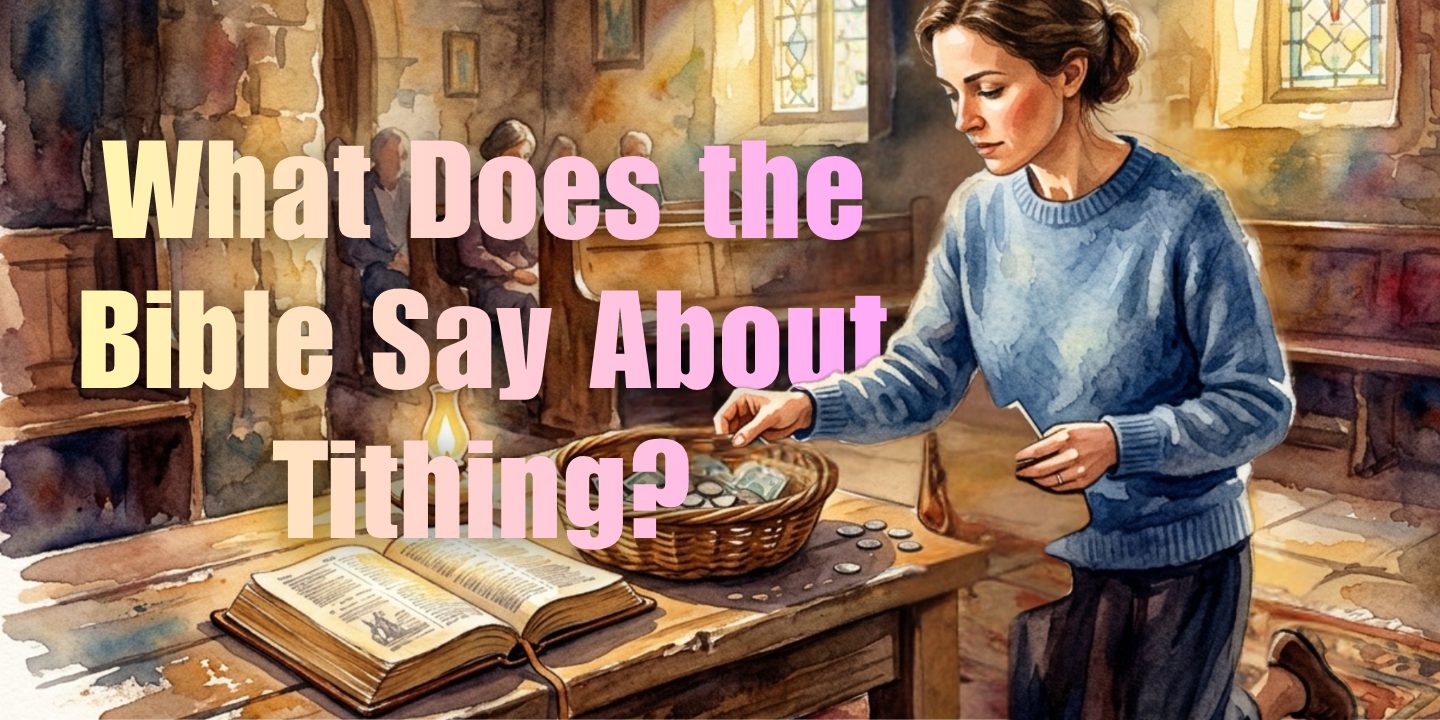
What Is Tithing According to the Bible?
Definition of Tithing
The word “tithe” simply means “a tenth.” At its core, tithing is the practice of giving the first ten percent of one’s income, produce, or increase back to God.
It’s worth distinguishing between tithes and offerings. A tithe is the baseline portion — the tenth — while an offering is anything given above and beyond that as an act of extra devotion or gratitude. Understood rightly, tithing was never meant to function like a tax extracted from unwilling citizens. It was designed as an act of worship, a physical expression of trust in God as provider and owner of all things.
Two passages anchor this definition:
- Leviticus 27:30 identifies the tithe of the land — whether of seed or fruit — as belonging to the Lord and set apart as holy to Him.
- Proverbs 3:9-10 instructs believers to honor the Lord with their wealth and the firstfruits of their increase, promising that obedience leads to abundant provision.
Did Tithing Exist Before the Law of Moses?
One of the most important — and often overlooked — facts about tithing is that it predates the Law of Moses entirely. This matters enormously for the modern debate, because it means tithing cannot simply be dismissed as an expired piece of Mosaic legislation.
Abraham Tithed to Melchizedek
In Genesis 14:18-20, more than four centuries before the Law was given at Sinai, Abraham returns from battle and gives a tenth of everything to Melchizedek, the priest-king of Salem. This is the first tithe recorded in Scripture, and it happens entirely outside the framework of Mosaic law.
Why does this matter for Christians today? Because the author of Hebrews later picks up this exact episode to make a theological argument about the superiority of Christ’s priesthood (more on that below). Abraham’s tithe becomes a foundation stone for New Testament teaching, not just an ancient historical footnote.
Jacob Promised to Tithe
Later, in Genesis 28:20-22, Abraham’s grandson Jacob makes a vow at Bethel, promising that of all God gives him, he will give back a tenth. Again, this occurs long before Sinai.
Why This Is Important
Because tithing shows up as an act of worship before the Law of Moses existed, it cannot be waved away as “merely Old Covenant law” that expired the moment Christ fulfilled the Law. Its roots run deeper — into the pattern of worship God established with His people from the very beginning.
Why Did God Establish Tithing?
To Teach Us That God Owns Everything
Tithing exists first and foremost to remind God’s people of a basic theological truth: everything belongs to Him.
- Psalm 24:1 declares that the earth and everything in it, the world and all who live in it, belong to the Lord.
- Haggai 2:8 has God stating plainly that the silver and the gold are His.
When a believer sets aside the first tenth, it becomes a tangible acknowledgment that the other ninety percent isn’t fully “theirs” either — it all belongs to God, who graciously allows His people to steward it.
To Cultivate Faith and Dependence on God
Deuteronomy 8:17-18 warns Israel against the prideful thought that their own strength produced their wealth, reminding them that it is God who gives the power to gain wealth. Tithing counters self-sufficiency and cultivates ongoing dependence on God as provider.
To Train Believers to Be Generous
Giving isn’t incidental to the character of God — it reflects who He is. A God who gave His own Son (John 3:16) shapes a people who give. Tithing is training wheels for a generous life.
FREE Guide:
10 Bible Verses for Financial Breakthrough
How Was Tithing Used in the Old Testament?
Supporting the Levites and Priests
Numbers 18:21 shows that the tithe was given to the tribe of Levi as their inheritance in exchange for their service at the tabernacle. Because the Levites received no land inheritance like the other tribes, the tithe functioned as their means of provision.
Supporting Worship and God’s Festivals
Deuteronomy 14:22-27 describes a tithe set aside and eaten in the presence of the Lord at the place He would choose, as part of Israel’s festival worship — a communal, joyful act of celebration before God.
Caring for the Poor and Needy
Deuteronomy 14:28-29 describes a tithe gathered every third year and stored within the towns, distributed to Levites, foreigners, orphans, and widows so that they would have enough to eat.
Did the Bible Teach More Than One Tithe?
Careful readers often notice what looks like more than one tithe described across these passages. Old Testament scholars generally identify:
- The first tithe — supporting the Levites (Numbers 18).
- The festival tithe — used for worship celebrations (Deuteronomy 14:22-27).
- The third-year tithe — dedicated to caring for the poor (Deuteronomy 14:28-29).
Without getting lost in the technical details, the overall pattern is clear: tithing in Israel funded worship, ministry, and mercy — three things the church still needs today.
Top 3 Best-Selling Christian Books for October 2026


Did Jesus Teach That Christians Should Tithe?
Jesus Never Condemned Tithing
This is perhaps the single most decisive point in the entire discussion. Nowhere in the Gospels does Jesus rebuke, dismiss, or nullify the practice of tithing.
Matthew 23:23 Explained
In Matthew 23:23, Jesus confronts the Pharisees for meticulously tithing even their garden herbs while neglecting “the weightier matters of the law” — justice, mercy, and faithfulness. But notice His conclusion: He tells them these weightier matters should have been practiced “without leaving the other undone.”
Jesus rebukes hypocrisy and misplaced priorities — not tithing itself. If Jesus had wanted to declare tithing obsolete, this would have been the perfect opportunity. Instead, He affirms it while elevating the deeper matters of the heart alongside it.
Why This Passage Matters
Matthew 23:23 shows that in Christ’s own teaching, tithing and justice/mercy/faith are not in competition. Christians are called to both a generous, faithful practice of giving and a life marked by justice and mercy.
What Changed Under the New Covenant?
| Topic | Old Testament | New Testament |
|---|---|---|
| Who practiced tithing? | Abraham, Jacob, Israel | Christians and disciples of Christ |
| Who received the tithe? | Levites and priests | Gospel ministers and God’s work |
| Priesthood | Levitical priesthood | Melchizedek priesthood under Christ |
| Purpose of tithing | Support worship and ministry | Support gospel preaching and ministry |
| Did God own the tithe? | Yes (Leviticus 27:30) | Yes |
| Was tithing affirmed by Jesus? | Not applicable | Yes (Matthew 23:23) |
| Was the principle abolished? | No | No evidence it was abolished |
| Key passage | Numbers 18:21 | Hebrews 7:12, 1 Corinthians 9:13-14 |
The Priesthood Changed
Hebrews 7:12 states plainly that a change in the priesthood necessarily brings a change in the law. This is the key that unlocks how many objections to tithing arise: people assume that because the Levitical system ended, the principle of tithing ended with it.
The Tithe Did Not Disappear — The Administration Changed
What changed under the New Covenant was the priesthood and the ceremonial system built around it — not the underlying principle that God’s people set aside a portion of their increase to support His work and acknowledge His ownership.
From Levitical Priesthood to the Ministry of Christ
Hebrews 7 develops an extended argument connecting Christ back to Melchizedek — the same priest-king to whom Abraham gave a tenth in Genesis 14. The author argues that Melchizedek’s priesthood was superior to the Levitical priesthood, and that Christ now holds a permanent priesthood in that same order.
This connection matters immensely: it ties Christ directly to the very first tithe recorded in Scripture, suggesting that the principle of tithing finds its fullest expression not in the Levitical system, but in submission to Christ Himself as our great High Priest.

Did the Early Church Practice Tithing?
Support for Gospel Workers
The New Testament church continued the pattern of financially supporting those who ministered the gospel, even without using the word “tithe” explicitly in every instance:
- Luke 8:1-3 describes a group of women who supported Jesus and His disciples out of their own means.
- Philippians 4:15-18 shows the Philippian church partnering financially with Paul’s ministry, sending support more than once for his needs.
- 1 Corinthians 9:13-14 makes perhaps the clearest New Testament connection to tithing principles.
“Those Who Preach the Gospel Should Live From the Gospel”
In 1 Corinthians 9, Paul draws a direct parallel between those who served at the temple altar and received their portion from it, and those who now preach the gospel. His argument is that just as temple service came with material support, gospel ministry today deserves the same.
Why Churches Still Need Financial Support Today
The categories haven’t changed much since the Old Testament: missions, evangelism, discipleship, and the ongoing work of the local church all require resources. Tithing provides a sustainable, biblically rooted pattern for meeting those needs.
Should Christians Tithe Today?
The Short Answer: Yes
Based on the full sweep of Scripture — from Abraham to Jesus to Paul — tithing remains a wise, faithful, and biblically grounded pattern for Christian giving.
Five Biblical Reasons Christians Should Tithe
- Tithing predates Moses. Abraham and Jacob both tithed before the Law existed, showing it as a principle of worship, not merely Mosaic legislation.
- Jesus affirmed it. In Matthew 23:23, Christ upholds tithing even while calling for deeper obedience.
- The New Testament never abolishes it. No passage explicitly cancels tithing; instead, the New Testament assumes ongoing generous, proportional giving.
- The gospel still requires financial support. Missions, ministry, and mercy all cost something, just as they did in Israel.
- Tithing develops faith and generosity. It trains believers to trust God and to reflect His generous character.
| Biblical Reason | Scripture | Why It Matters |
|---|---|---|
| Tithing predates Moses | Genesis 14:20 | It was not created by the Sinai covenant |
| Jesus affirmed tithing | Matthew 23:23 | Christ never abolished it |
| The priesthood changed, not the principle | Hebrews 7:12 | The administration changed |
| The gospel requires support | 1 Corinthians 9:14 | Ministry work still needs funding |
| Tithing teaches faith | Malachi 3:10 | Giving develops trust in God |
Common Arguments Against Christian Tithing
“Tithing Was Only for Israel”
While tithing was certainly codified within Israel’s national life, its origins with Abraham and Jacob predate Israel as a nation, showing it as a broader principle of worship applicable beyond that specific covenant community.
“We Are Under Grace, Not Law”
Being under grace doesn’t eliminate the wisdom of biblical principles — it transforms the motivation behind them. Christians tithe not to earn favor with God, but in joyful response to grace already received.
“The New Testament Only Teaches Giving”
Even where the specific word “tithe” isn’t used, New Testament giving described in places like 1 Corinthians 9 and 2 Corinthians 8-9 assumes generous, sacrificial, proportional giving — of which the tithe is a reasonable and time-tested baseline.
“Jesus Fulfilled the Law”
Christ’s fulfillment of the ceremonial and sacrificial law doesn’t erase every moral and worship-oriented principle embedded within it. Tithing, rooted in worship rather than sacrifice for sin, continues as a pattern of honoring God with material resources.
“Tithing Was Agricultural Only”
While the Old Testament tithe often involved crops and livestock, the underlying principle — giving God the first and best portion of one’s increase — translates naturally into any economic context, agricultural or otherwise.
| Objection | Short Biblical Response |
|---|---|
| Tithing was only for Israel | Abraham tithed centuries before Israel existed |
| We are under grace, not law | Grace never abolished generosity or obedience |
| Jesus fulfilled the law | Fulfillment does not automatically mean abolition |
| The New Testament teaches only freewill giving | The New Testament teaches both generosity and support for ministry |
| Tithing was only agricultural | Abraham tithed from war spoils and increase |
| Hebrews 7 abolished tithing | Hebrews discusses a change in priesthood, not abolition of tithing |
Are Christians Cursed If They Do Not Tithe?
Understanding Malachi 3:8-10
Malachi 3:8-10 contains one of the most quoted — and most misunderstood — passages on this topic. God confronts Israel for withholding tithes and offerings, calling it “robbing” Him, and then invites them to test Him by bringing the full tithe into the storehouse, promising to pour out blessing in return.
“Robbing God” in this context refers to Israel’s covenant unfaithfulness — withholding what rightfully belonged to Him as an expression of broken trust and worship.
Does This Apply to Christians?
While Christians are not under the Mosaic covenant’s specific curses and blessings structure, the underlying heart posture Malachi confronts — withholding from God what belongs to Him — remains a legitimate spiritual concern. Caution is warranted here: this passage should never be used to manipulate believers with fear, or twisted into a prosperity-gospel formula promising guaranteed material wealth in exchange for giving. God’s blessings are not a vending machine.
The Blessings of Obedience
Rightly understood, faithful giving invites spiritual blessing, aligns believers with Kingdom priorities, and reflects confidence in God’s provision — not a guarantee of financial windfall, but a deeper walk of trust.
How Much Should Christians Tithe?
Gross or Net Income?
This is a genuinely debated question among sincere believers. Some argue for tithing on gross income, treating the “firstfruits” principle as applying to income before any deductions. Others argue for net income, tithing what actually reaches the household. Scripture doesn’t spell this out explicitly, so believers are encouraged to prayerfully and conscientiously decide before God rather than following a rigid formula imposed by others.
Should Christians Give More Than 10 Percent?
Many pastors and theologians frame the tithe as a floor rather than a ceiling — a starting point for giving, not the maximum expression of generosity. Believers with greater means, in particular, are often encouraged to consider giving beyond ten percent as an act of worship.
What About People in Financial Hardship?
Scripture consistently prioritizes faithfulness and heart posture over rigid amounts. Jesus commended the poor widow in Mark 12:41-44 not for the size of her gift but for giving out of her poverty. Christians facing genuine financial hardship should seek wisdom and grace rather than legalistic guilt, trusting that God values faithfulness above all.
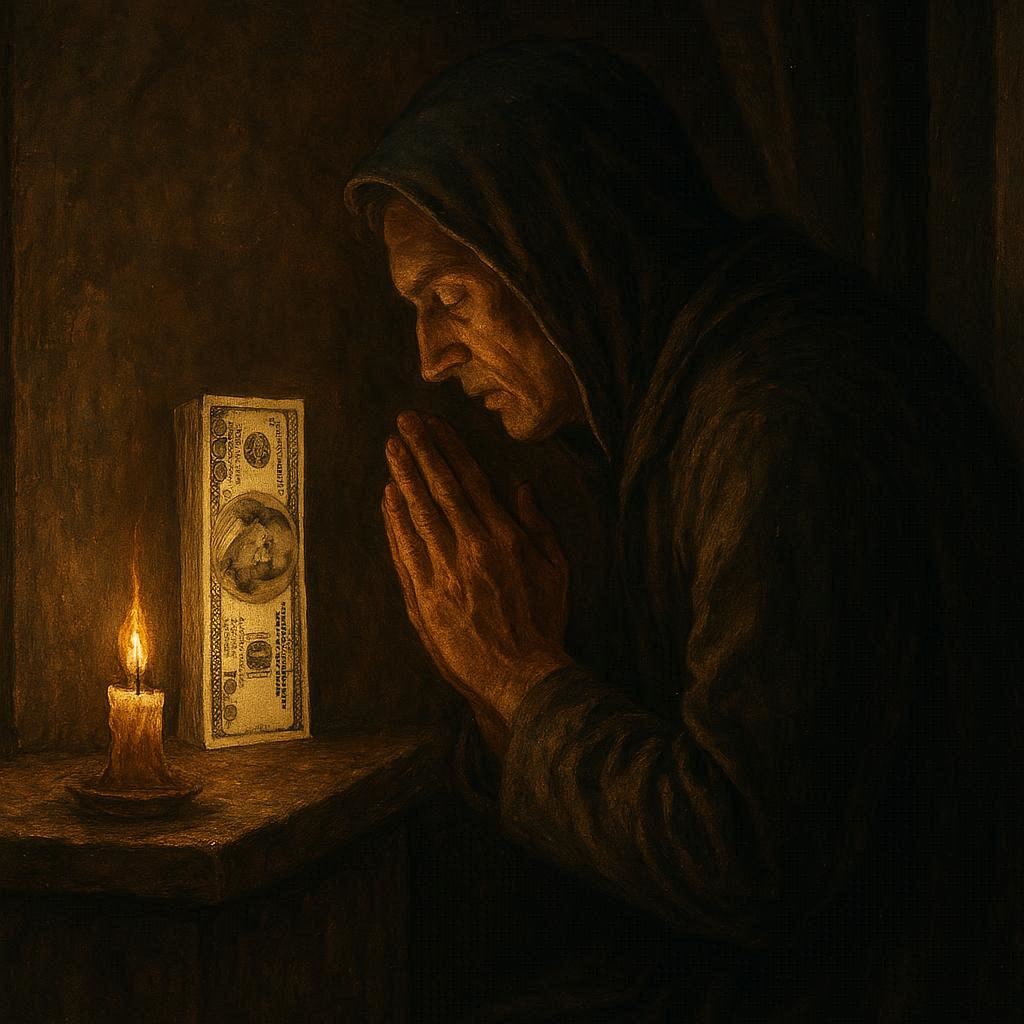
Where Should Christians Give Their Tithe?
To the Local Church?
Many believers point to the Old Testament pattern of the tithe going to the “storehouse” — the central place of worship and ministry — as a model for directing the tithe primarily to one’s local church body.
To Ministries Preaching the Gospel?
Others recognize that gospel-preaching ministries and missions organizations, functioning as extensions of the church’s mission, are also legitimate recipients consistent with the New Testament pattern of supporting gospel workers.
Can Christians Split Their Tithe?
Practically speaking, many believers choose to direct the majority of their giving to their local church, where they are fed and discipled, while also supporting other gospel-centered ministries as they feel led — a balance that honors both the local storehouse principle and the broader mission of the gospel.
Practical Steps to Start Tithing Faithfully
- Put God first financially. Make giving the first line item in your budget, not the last.
- Set aside the tithe immediately. Give from the “firstfruits,” not the leftovers.
- Treat it as worship. Approach giving with a joyful, worshipful heart rather than obligation or guilt.
- Track your giving. Keep records to stay consistent and intentional over time.
- Trust God’s promises. Give in faith, believing that God is a faithful provider.

Conclusion: Tithing Is About More Than Money
At its heart, tithing was never really about money. It’s about priorities. It’s about acknowledging that God owns everything we have, rather than treating our resources as something we’ve earned entirely on our own. It’s about supporting the ongoing mission of Christ’s church in the world — its worship, its ministry, its care for the vulnerable. And ultimately, it’s about being shaped into people who give freely and joyfully, just as our Heavenly Father gives to us.
If God truly owns everything we have, is returning the first ten percent really too much to ask?

About the Author
Joshua Infantado is a Christian blogger and Bible teacher who has been writing faith-based content since 2013. He is the founder of Becoming Christians, where he shares blogs, books, videos, and online courses to help believers grow in truth and grace. Joshua lives in Davao City, Philippines, with his wife, Victoria, and their son, Caleb. Contact him at joshuainfantado@gmail.com.
Discover more from Becoming Christians
Subscribe to get the latest posts sent to your email.