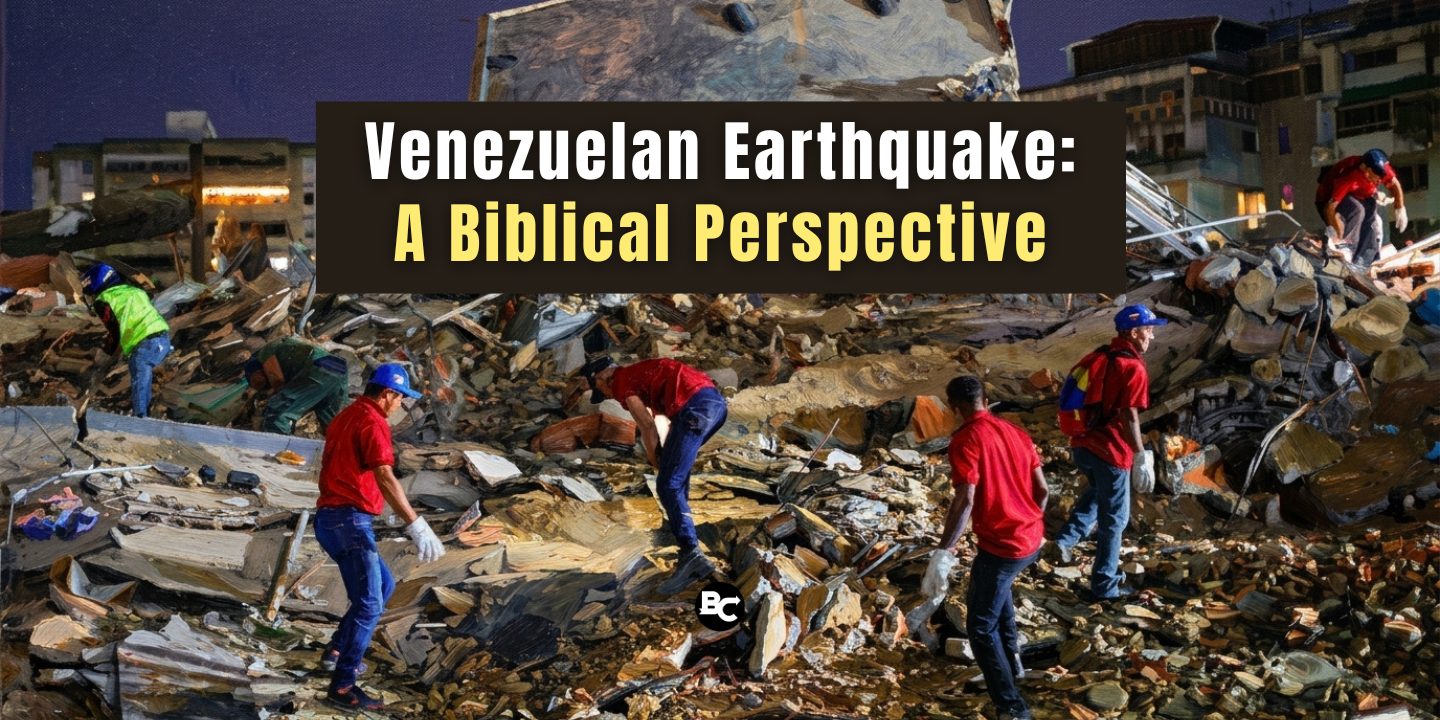
On June 24, 2026, millions of people in Venezuela experienced something that every person fears but hopes never to face.
Without warning, two powerful earthquakes struck just seconds apart. Reports indicate that the quakes measured approximately 7.2 and 7.5 in magnitude, sending shockwaves across the region.
Buildings were damaged, people rushed into the streets in panic, emergency responders sprang into action, and authorities began assessing the full extent of the destruction.
One moment, life was normal.
The next, everything changed.
As I read the news, I couldn’t help but think about the countless families whose lives were turned upside down in a matter of seconds. Parents wondering whether their children were safe. Children terrified by the violent shaking of the ground beneath their feet. Families desperately trying to contact loved ones amid the chaos.
It is easy to read headlines and move on.
It is much harder to imagine yourself in their place.
Yet earthquakes have a way of reminding us of something we often forget: life is fragile.
We make plans. We build careers. We save money. We dream about tomorrow. But events like these remind us that the future is never guaranteed. In a fallen world, tragedy can arrive without warning.
That reality can be uncomfortable.
But perhaps that is exactly why moments like these deserve our attention.
What Should Christians Think About Earthquakes?
When disasters strike, many people immediately ask difficult questions.
“Where was God?”
“Why would a loving God allow this?”
“Is this a sign of the end times?”
While not every earthquake has a specific prophetic meaning, Jesus did tell His followers that earthquakes would be among the conditions characterizing our troubled world.
In Matthew 24:7-8 (NKJV), Jesus said:
“For nation will rise against nation, and kingdom against kingdom. And there will be famines, pestilences, and earthquakes in various places. All these are the beginning of sorrows.”
Notice that Jesus did not tell His followers to panic.
He told them to pay attention.
Earthquakes remind us that humanity’s problems cannot ultimately be solved through technology, politics, economics, or human ingenuity alone. As impressive as our achievements may be, we remain vulnerable. We cannot control the earth beneath our feet.
We need something greater.
We need God’s Kingdom.
A Time for Compassion, Not Speculation
Whenever a disaster occurs, some people rush to assign blame or make bold claims about God’s intentions.
But before we debate theories, we should remember the human suffering involved.
Real people are hurting.
Some have lost homes.
Some have lost possessions.
Some may have lost loved ones.
As followers of Christ, our first response should be compassion.
The Apostle Paul wrote in Romans 12:15 (NKJV):
“Rejoice with those who rejoice, and weep with those who weep.”
This is a time to pray for Venezuela. Pray for families affected by the disaster. Pray for rescue workers searching through damaged structures. Pray for wisdom for government leaders and emergency personnel. Pray for comfort for those who are grieving and for hope for those who feel overwhelmed.
Prayer may seem small to some people.
But for believers, prayer is never small.
It is one of the most powerful things we can do.
Best Christian Parenting Books in August 2026


Can God Bring Good Out of Tragedy?
This is perhaps one of the hardest questions to answer.
No one should celebrate suffering. No one should pretend that pain is pleasant.
Yet Scripture repeatedly shows that God can bring purpose from trials.
Romans 5:3-4 (NKJV) says:
“We also glory in tribulations, knowing that tribulation produces perseverance; and perseverance, character; and character, hope.”
Trials can deepen our faith.
They can strip away distractions.
They can remind us of what truly matters.
And they can draw us closer to God in ways that comfort and prosperity often cannot.
That does not mean God enjoys seeing people suffer. It means He is able to work even through the brokenness of this present world.
A Question Worth Exploring
The devastating earthquake in Venezuela forces us to confront questions many people would rather avoid.
Why does God allow natural disasters?
Why does suffering exist?
What purpose, if any, can come from these events?
These are not easy questions, but they are important ones.
If you’ve ever wrestled with them, I invite you to read my full article:
“7 Reasons Why God Allows Earthquakes.”
In that study, we explore what the Bible really teaches about earthquakes, suffering, God’s purpose for humanity, and the incredible hope that lies ahead.
The ground beneath our feet may shake.
The world around us may seem uncertain.
But God’s promises remain firm.
And in a world filled with tragedy, that is a hope worth holding onto.
Discover more from Becoming Christians
Subscribe to get the latest posts sent to your email.