Let me say this plainly.
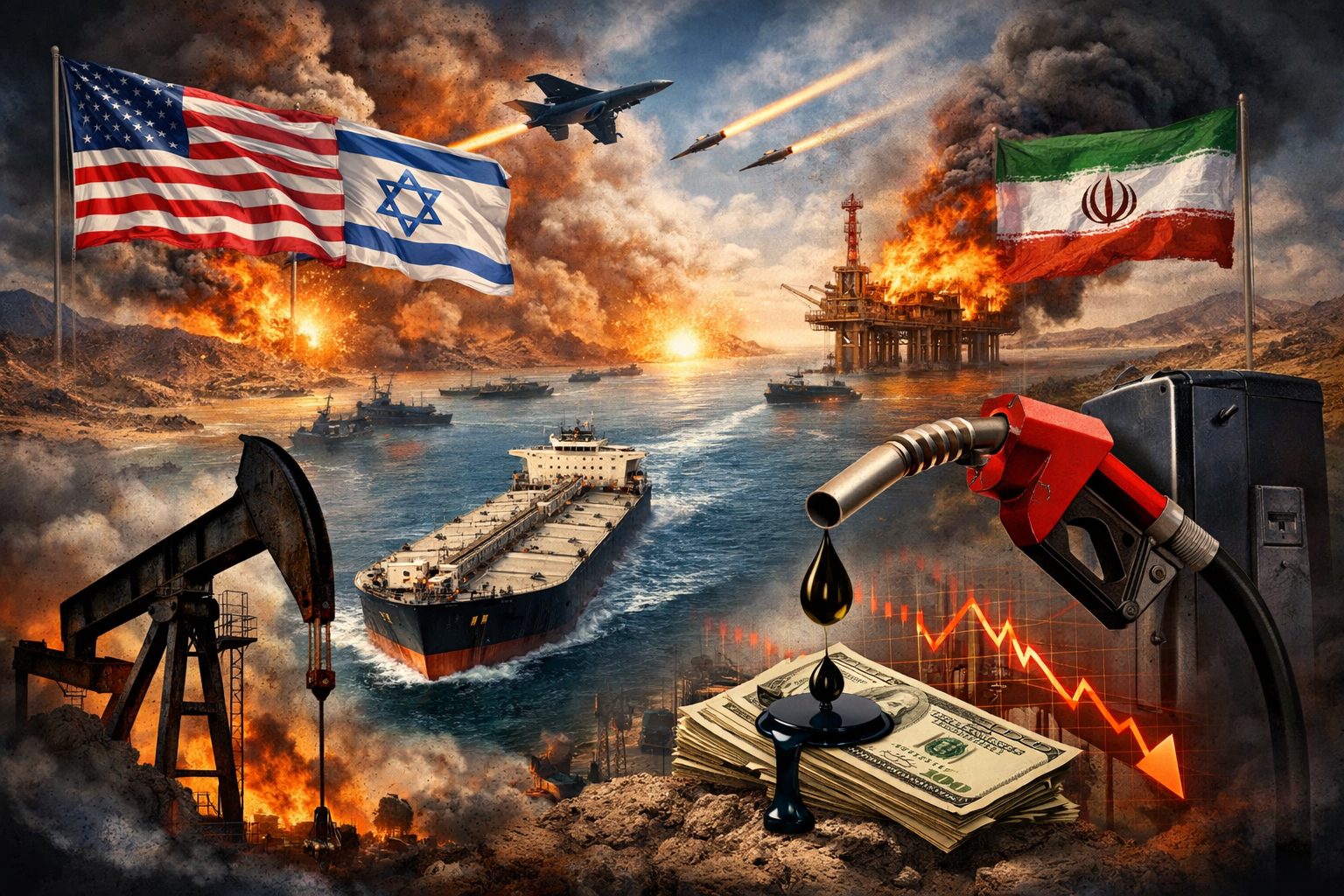
If the conflict between the United States, Israel, and Iran intensifies, this is not just another Middle Eastern war you scroll past on your phone.
This could hit your wallet.
Your groceries.
Your electricity bill.
Your church missions budget.
Because at the center of it all lies one narrow stretch of water: the Strait of Hormuz.
And what happens there does not stay there.
Why the Strait of Hormuz Matters So Much
Roughly one fifth of the world’s oil supply passes through that narrow channel between Iran and Oman. Tankers carrying crude oil and liquefied natural gas move through it daily, fueling economies from Asia to Europe to North America.
It is one of the most strategically sensitive waterways on earth.
If Iran attempts to block or disrupt it, whether through mines, missile threats, naval harassment, or proxy action, oil markets will react instantly. Even the fear of disruption can drive prices up.
Markets do not wait for certainty.
They move on risk.
And risk is already rising.
How Oil Prices Could Surge and Why You Should Care
Let’s bring this closer to home.
When oil prices rise sharply, everything else follows.
Gasoline becomes more expensive.
Shipping costs increase.
Air travel becomes costlier.
Electricity prices climb in countries dependent on imported energy.
Then the ripple spreads.
Food prices rise because transporting produce, meat, and packaged goods becomes more expensive. Farmers pay more for fuel and fertilizer. Manufacturers pay more for production. Retailers pass on those costs.
You feel it at the checkout counter.
And it does not just affect wealthy nations. In fact, developing economies suffer the most. Countries that import energy face currency pressure, debt strain, and inflation spikes. For families living paycheck to paycheck, a global oil shock is not theoretical. It is survival.
History shows us this clearly. Major oil disruptions in the 1970s reshaped global inflation for years. A prolonged crisis today could trigger similar turbulence, especially in an already fragile global economy.
This is why economists are watching the Strait of Hormuz so closely. It is not only about missiles and warships. It is about bread and fuel and stability.
Supply Chains Under Stress
We learned during the pandemic how fragile global supply chains really are.
A disruption in one place affects everyone.
Now imagine that fragility combined with a major energy shock.
Shipping routes could become riskier. Insurance costs for vessels traveling through the Gulf could skyrocket. Companies may reroute cargo, adding time and expense. Energy intensive industries may slow production.
Inflation, which many nations have struggled to tame, could surge again.
For Western economies, this could mean delayed interest rate cuts, tighter financial conditions, and renewed political pressure. For developing nations, it could mean food insecurity and social unrest.
Energy is the bloodstream of the modern world.
Constrict the artery, and the body reacts.
Top 3 Christian Books for Overcoming Anxiety (July 2026)

Geopolitical Fallout and Shifting Alliances
Here is where it becomes even more complex.
When energy markets tighten, alliances shift.
Countries heavily dependent on Gulf oil will push hard for de escalation. Some may seek closer ties with alternative suppliers such as Russia or Venezuela. Others may accelerate investments in renewable energy or nuclear power.
China and India, as major energy importers, would be watching closely. Europe, already reshaped by the war in Ukraine, could face renewed pressure on energy diversification. Gulf states may find themselves balancing between Western security guarantees and regional stability.
Energy is not just economic. It is political leverage.
And in moments of crisis, leverage becomes power.
The Human Cost Behind the Headlines
It is easy to discuss oil flows and global markets as if they are numbers on a screen.
But beneath every statistic are real people.
Families in Tel Aviv running to shelters.
Families in Tehran fearing escalation.
Workers in Manila, Nairobi, or São Paulo wondering why food prices just went up again.
War spreads pain in concentric circles.
First the battlefield.
Then the region.
Then the world.
We are all more connected than we think.
A Christian Reflection in the Midst of Chaos
So where does faith fit into all of this?
We are not called to panic.
We are not called to ignore reality either.
Scripture does not deny that nations rage. It acknowledges it clearly.
“The Lord brings the counsel of the nations to nothing; He makes the plans of the peoples of no effect. The counsel of the Lord stands forever, the plans of His heart to all generations.” Psalm 33:10 to 11 NKJV.
Nations strategize. Markets fluctuate. Leaders posture.
But God is not pacing in heaven.
He reigns.
And yet, the Bible is also honest about the roots of conflict. James writes, “Where do wars and fights come from among you? Do they not come from your desires for pleasure that war in your members?” James 4:1 NKJV.
Greed. Pride. Fear. Power.
These are not new.
In times like this, Christians must resist two temptations.
First, fear driven obsession.
Second, careless indifference.
Instead, we pray. We stay informed. We act wisely.
We prepare our households prudently without surrendering to anxiety. We support relief efforts when possible. We pray for leaders, even those we disagree with, because 1 Timothy 2:1 to 2 commands it.
And we anchor our hope in something far more stable than oil markets.
“God is our refuge and strength, a very present help in trouble. Therefore we will not fear.” Psalm 46:1 to 2 NKJV.
Not naive.
Not detached.
But not afraid.
What Should We Do?
Pray for peace in the Middle East.
Pray for civilians caught in conflict.
Pray for wisdom for global leaders.
Examine your own heart. Are you placing your ultimate security in economic stability, or in God?
Use moments of global shaking as reminders that this world is not our final home.
Empires rise.
Trade routes shift.
Markets tremble.
But the Kingdom of God does not fluctuate with the price of oil.
And that is the anchor that holds.
Stay watchful.
Stay compassionate.
Stay rooted in Christ.
Because while the Strait of Hormuz may be a chokepoint for oil, it is not a chokepoint for hope.
Your Support Can Change Lives—Here’s How
If the articles on this website have blessed or inspired you, would you prayerfully consider supporting this ministry?
I’m not asking for much—just a simple pledge of $5 a month can make a huge difference. Right now, only 4 faithful supporters are helping carry this work forward. But there’s still so much more to be done.
With your support, we can reach more hearts, spread Yahshua’s truth further, and shine a brighter light in an increasingly dark world.
👉 Click here to become a supporter.
As a heartfelt thank-you, you’ll receive daily Bible study resources to keep you inspired, grounded, and equipped to live out your faith boldly.
Together, let’s bring the message of hope, truth, and transformation to more lives—one soul at a time.
Discover more from Becoming Christians
Subscribe to get the latest posts sent to your email.