Every year, as the seventh month on God’s biblical calendar approaches, a holy day arrives with a prophetic message that shakes the heavens and earth; the Day of Trumpets.
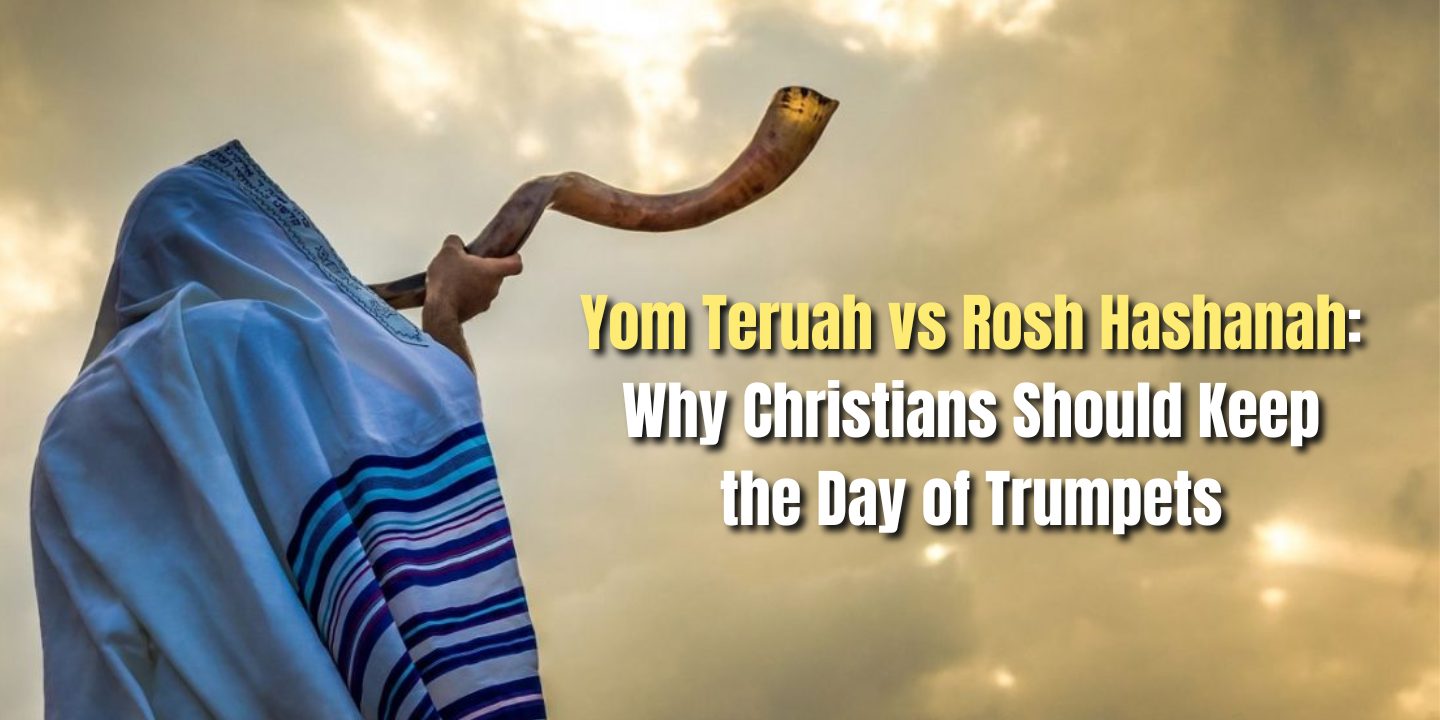
In Hebrew, it’s called Yom Teruah, meaning “Day of Blowing” or “Day of Shouting.”
Many people, however, know this same day by a different name: Rosh Hashanah, the Jewish New Year.
From the outside, both observances might seem identical. Both blow the shofar, both gather in solemn assemblies, and both mark a sacred day.
Yet behind the shared sounds of the trumpet lies a dramatic difference in meaning, purpose, and spiritual significance.
For Christians who seek to honor Yahweh’s appointed times, understanding this difference is critical.
Yom Teruah is not merely an ancient Jewish holiday. It is a prophetic rehearsal of the future return of Yahshua the Messiah.
Let’s explore how Yom Teruah differs from Rosh Hashanah, why the Jewish observance shifted, and why Christians should keep the Day of Trumpets today.
The Biblical Name vs. the Rabbinic Name
The Bible calls this festival Yom Teruah, which literally means “Day of Blowing (Trumpets)” (Leviticus 23:23–25). God commanded His people to observe it on the first day of the seventh month (Tishri) as a memorial of trumpet blasts. The focus is on the sound of the trumpet—an alarm, a signal, a warning, and a call to rejoice.
In contrast, Judaism today calls the day Rosh Hashanah, meaning “Head of the Year.” It is observed as the Jewish civil New Year, a time of reflection, judgment, and renewal.
But here’s the key difference: the term “Rosh Hashanah” never appears in the Bible in connection with this festival. The shift in name—and meaning—developed after the Babylonian exile (around the 6th century B.C.), when Jewish leaders began counting the year from Tishri instead of the spring month of Nisan (Exodus 12:2).
By the time of the Mishnah (around 200 A.D.), rabbinic tradition firmly established Tishri as the “head of the year,” adding new layers of meaning that Scripture never commands.
Changing the name changed the message. Yom Teruah’s focus on the trumpet blast and the coming Kingdom of God was replaced with a civil new year focused on annual judgment.
One Day vs. Two Days
Scripture clearly states that Yom Teruah is to be observed on one day only—the first day of the seventh month (Leviticus 23:24). Yet in modern Judaism, Rosh Hashanah is celebrated for two full days.
Why? Historically, the ancient Jewish calendar depended on witnesses to confirm the sighting of the new moon. Because the new moon could be delayed or obscured, rabbis added a second day to ensure no one missed the correct date. What began as a safeguard eventually became an entrenched tradition.
While careful intentions may sound reasonable, God never commanded two days.
Adding extra rules—even for “safety”—risks overshadowing the simplicity of God’s Word. Yeshua warned of this danger when He said, “In vain they worship Me, teaching as doctrines the commandments of men” (Matthew 15:9).
Jewish Traditions vs. God’s Command
Modern Rosh Hashanah is filled with rich customs, many of which are beautiful but not biblically mandated:
- Shofar Blasts – Hearing 100 blasts of the ram’s horn as a call to repentance.
- Tashlich Ceremony – Throwing bread crumbs into water to “cast away sins.”
- Festive Foods – Eating apples dipped in honey for a “sweet year,” pomegranates for blessings, and fish heads to symbolize being “the head and not the tail.”
- Special Greetings – Wishing one another to be inscribed in the “Book of Life” for a good year.
While these traditions can be symbolic reminders, they can also drift toward superstition, implying that physical acts—like eating sweet foods or casting bread—can guarantee divine favor.
But Scripture teaches that forgiveness and blessing come only through repentance and the blood of Yahshua (Ephesians 1:7; Hebrews 9:22), not rituals.
Signs of the Age
Core Beliefs of Rosh Hashanah—and Their Problems
Judaism attaches several key ideas to Rosh Hashanah, including:
- The Birthday of the World – Rabbis teach it marks the creation of Adam and Eve, though the Bible gives no such command or date.
- Annual Judgment – Jews believe God opens the “Book of Life” to decide each person’s fate for the coming year, sealing the verdict on Yom Kippur.
While these ideas may inspire reflection, they miss the heart of God’s plan. Judgment is not an annual event—it begins with the house of God (1 Peter 4:17) and culminates when Yahshua returns to establish His Kingdom (1 Thessalonians 4:16–17; Revelation 20:12).
Being written in the Lamb’s Book of Life is about eternal salvation, not securing a sweet year on earth (Revelation 21:27).
The True Meaning of Yom Teruah
When we strip away human traditions, the prophetic purpose of Yom Teruah shines brightly. The blowing of trumpets is a warning and a promise. It points to the future moment when:
- Yahshua will descend from heaven with a shout and the trumpet of God (1 Thessalonians 4:16–17).
- The dead in Christ will rise first, and the faithful will meet Him in the air.
- The kingdoms of this world will become the Kingdom of our Lord (Revelation 11:15).
- Yahweh will establish a government of peace, justice, and righteousness that will never end (Daniel 2:44–45).
This day is not about wishing for a prosperous year—it’s about preparing for the return of the King of kings.
Why Christians Should Keep Yom Teruah
Christians are not called to imitate Jewish traditions for tradition’s sake, but to obey the eternal commands of Yahweh and embrace their prophetic meaning. Yom Teruah is a divine appointment (moed) given by God Himself. Observing it keeps us focused on:
- The Hope of Christ’s Return – Amid war, corruption, and suffering, the Day of Trumpets proclaims that Yahshua will soon end human misrule.
- Spiritual Readiness – The trumpet blast reminds us to repent, stay alert, and remain faithful.
- God’s Kingdom – It points us beyond earthly cycles to the eternal reign of Yahshua.
A Call to Prepare
In a world drowning in conflict, corruption, and despair, Yom Teruah declares a message of hope: our King is coming. The trumpet will sound, the dead will rise, and Yahshua will establish a Kingdom that will never be destroyed.
As followers of Christ, we keep this day not because of man-made tradition but because it points us to the greatest event in history—the return of our Savior. Let the blast of the shofar awaken our hearts, renew our faith, and anchor us in the promise of His soon-coming reign.
“Then the seventh angel sounded: And there were loud voices in heaven, saying, ‘The kingdoms of this world have become the kingdoms of our Lord and of His Christ, and He shall reign forever and ever!’” (Revelation 11:15)
Final Thoughts
Yom Teruah and Rosh Hashanah may fall on the same calendar date, but their meanings are worlds apart. One celebrates human tradition and a civil new year; the other proclaims the soon-coming Kingdom of Yahweh.
As Christians, we are called to keep the day as God commanded—a memorial of trumpet blasts, a rehearsal of the return of the Messiah, and a reminder to stay watchful and faithful. The trumpet is about to sound. Are you ready?
Discover more from Becoming Christians
Subscribe to get the latest posts sent to your email.
Awesome explanation, Joshua! You are a wonderful writer. After 56 years of keeping Trumpets, you had some good points that I had heard but forgotten, and I wrote many down.
Thank you, Robert! Praise Yah for His inspiration and grace for allowing us to know these truths. 🙂