If you think you already understand the Day of Atonement, think again.
This ancient festival—often overlooked or misunderstood—isn’t just some old Jewish custom buried in the pages of Leviticus. It’s alive with meaning. It’s bold. And it reveals stunning truths about your future, the fate of humanity, and the cosmic battle between good and evil.
Let’s pull back the curtain on this Holy Day and uncover seven shocking truths that will change the way you see God’s plan forever.
1. It’s the One Day God Commands His People to Fast
Most of God’s festivals are feasts. They’re times of rejoicing, of eating and drinking in celebration of His blessings. But the Day of Atonement is completely different.
Leviticus 23:27 says, “You shall afflict your souls”—a Hebrew expression meaning to fast. No food. No water.
Why? Because fasting humbles us. It strips away distractions and reminds us how fragile we really are. For 24 hours, we admit before God, “I am nothing without You.”
It’s not about forcing God’s hand or earning points with Him. It’s about drawing close to Him in deep dependence. And that’s a shock in a world that worships self-reliance.
2. It Points to a Future Without Satan’s Influence
Here’s a hard truth: you and I live in a world deceived.
Revelation 12:9 says Satan “deceives the whole world.” He whispers lies into cultures, governments, and even personal thoughts. And humanity—billions of people—follow along, often without realizing it.
But Revelation 20:1-3 reveals a breathtaking event: after Jesus Christ returns, an angel will seize Satan, bind him, and lock him away for a thousand years.
The Day of Atonement pictures that moment. Finally, the deceiver will be silenced. Imagine a world where temptation, hatred, and manipulation are no longer in the air we breathe.
That’s not a fantasy. That’s God’s next move.
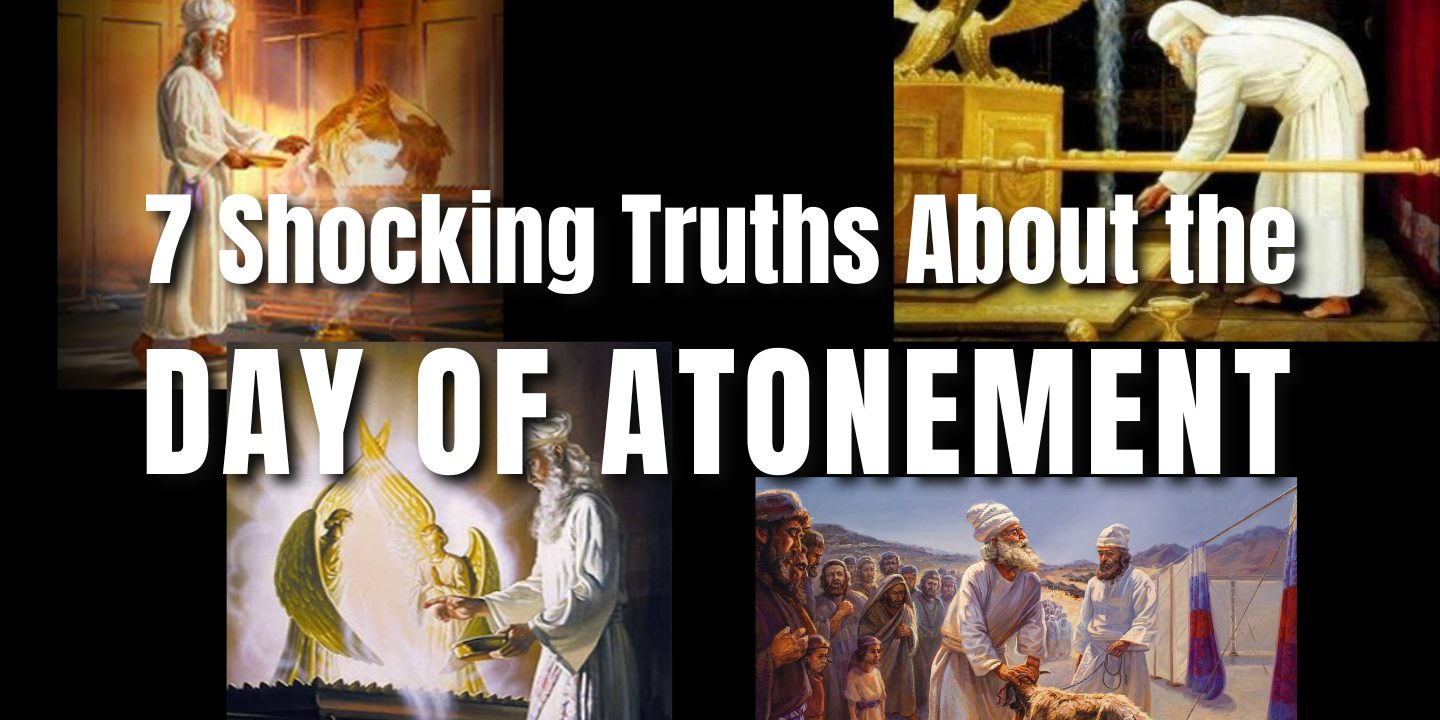
3. The Two Goats Tell the Story of Salvation
This might be the most mysterious part of Atonement. In Leviticus 16, two goats were chosen.
One goat was sacrificed—its blood symbolizing the payment for sin. That goat represents Jesus Christ, who shed His blood for the forgiveness of our sins (Hebrews 9:12).
The other goat? It wasn’t killed. Instead, the high priest placed the sins of the nation on its head and sent it into the wilderness. This “Azazel goat,” often translated “scapegoat,” represents Satan—the real instigator of sin—who will one day be removed from humanity’s presence.
One goat redeems. The other is banished. Together, they reveal God’s two-fold plan: forgiveness of sin and removal of the cause of sin.
4. It Shows Why Peace on Earth Is Impossible… for Now
Every beauty pageant dreams of “world peace.” Every politician promises it. Yet war, crime, and suffering never stop.
Why? Because as long as Satan remains free, peace is a mirage.
The Day of Atonement declares something radical: lasting peace will only come when the devil is removed. Until then, mankind will keep running in circles, trying to fix a problem it doesn’t even understand.
When Christ returns and Satan is bound, the world will finally experience the peace it’s been chasing for thousands of years (Isaiah 9:6-7).
5. It Opens the Door to True Reconciliation
“Atonement” literally means “at-one-ment.”
It’s about being made one with God.
Jesus’ sacrifice bridges the chasm between us and our Creator. Hebrews 4:16 says because of His blood we can “come boldly to the throne of grace.”
That’s shocking when you think about it. The God who spoke galaxies into existence invites you—yes, you—to approach Him with confidence.
The Day of Atonement shouts this truth: nothing—not even Satan’s schemes—can keep you from the mercy of a loving Father if you repent and turn to Him.
6. It’s a Prophetic Countdown
The Day of Atonement isn’t random. It falls right after the Feast of Trumpets, which pictures the return of Jesus Christ.
First the King returns. Then the enemy is removed. Only after that can the next festival, the Feast of Tabernacles, picture a world finally at peace.
God’s holy days are a roadmap—a divine timeline of events that will unfold. Atonement is the turning point where evil is restrained and humanity can finally breathe.
7. It Demands a Personal Response
This is where it gets personal.
The Day of Atonement isn’t just about prophecy or rituals in ancient Israel. It’s about you—right now.
Will you humble yourself before God? Will you fast not just with your stomach, but with your heart—laying aside pride, resentment, and self-will?
James 4:7 gives the challenge: “Submit to God. Resist the devil and he will flee from you.”
The Day of Atonement is a yearly reminder that God is calling you to reject Satan’s lies and draw near to Him—today, not someday.
A Day That Changes Everything
The Day of Atonement isn’t just another date on a calendar. It’s a powerful declaration of God’s love and His unstoppable plan to save the world.
It’s a day of humbling, a day of hope, a day that points to the greatest turning point in human history.
So when this Holy Day arrives, don’t let it slip by as a dusty tradition. Fast. Pray. Seek God with all your heart.
Because one day soon, the trumpet will sound, the enemy will be removed, and the world will finally be at one with its Creator.
And you don’t want to be on the sidelines when that happens.
Discover more from Becoming Christians
Subscribe to get the latest posts sent to your email.